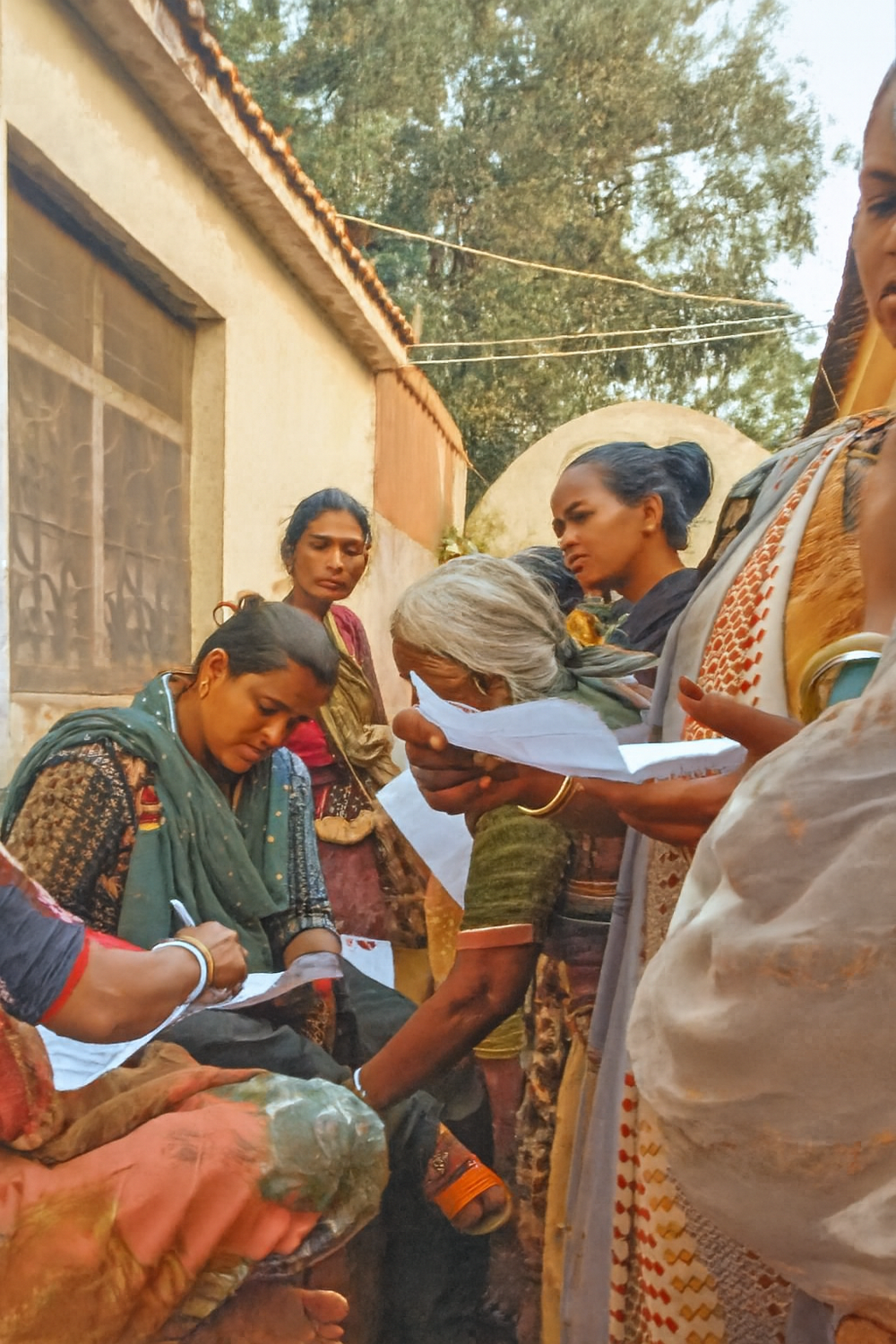
Amrutben plants a flag of urban resistance in Pithora Peer
Imagine your family ekes out a bare living in a city. Imagine home is a tiny urban tenement, with hardly any basic amenities, but this is your only shelter in a hostile city. Now imagine this home is on land marked ‘illegal.’ You may have lived there for generations, and provided an essential service to the city but, in the eyes of the law, you are still considered ‘land grabbers’ and ‘encroachers.’ Lying awake at night, you dream the dreams of the desperate – can I somehow build a secure life for my family in this city? In the harsh morning light, you realise you don’t know how; you cannot navigate the systems, the papers, the processes. You become removable, each time someone with more influence, more power, more armed with the know-how to work this system, eyes the land on which you live.
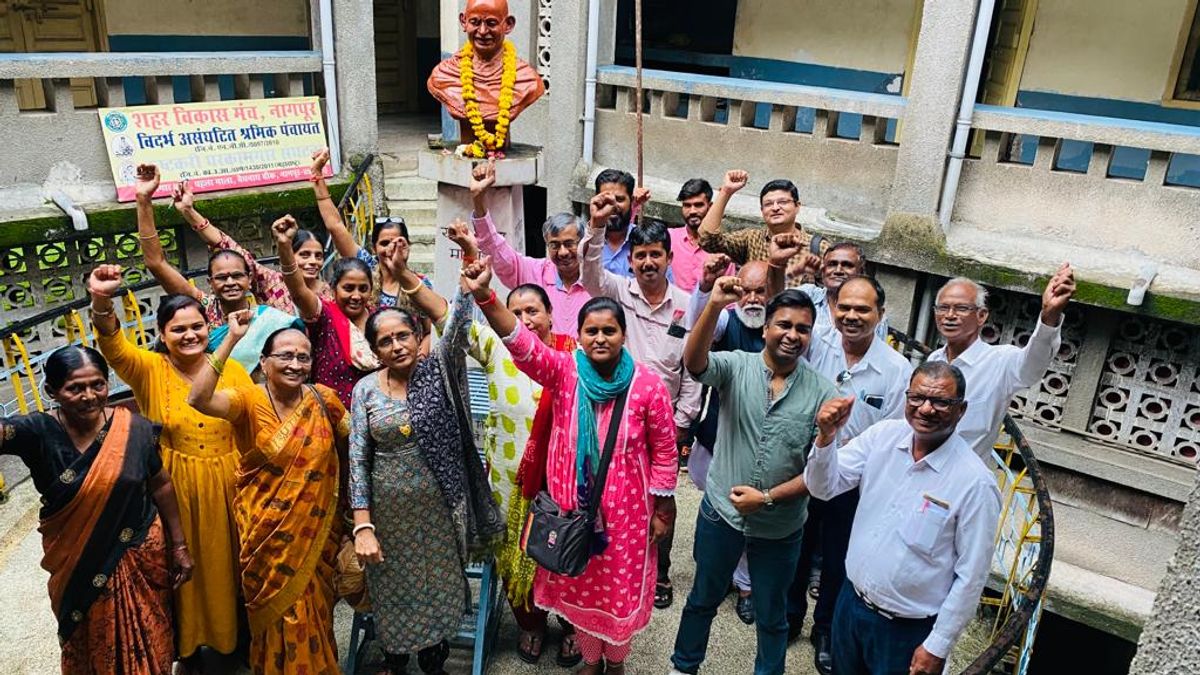
The residents of Pithora Peer, mostly daily wage construction labourers, had lived there for over 70 years. But the land on which their humble dwellings stood was not theirs. They were ‘illegal’ occupants. An influential builder, having already put in his papers to acquire an adjacent plot, was now laying claim to the land on which these residents lived. Fear gripped the community.
At that time, four organisations in Bhuj City (Hunnarshala, Setu, Sakhi Sangini Sangathan and KMVS), as part of a collective housing rights initiative, were working in partnership with the city government to implement the Rajiv Awas Yojana, a central government scheme to provide affordable housing to the urban poor. Some residents reached out to KMVS, a partner in this programme. The relationship was a rapid learning curve for the residents of Pithora Peer. For the first time in their precarious urban existence, someone sat with them and showed them land surveys, discussed urban land policies and politics, and educated the community about rules governing urban land acquisition. To their utter distress, it seemed as if it was ‘first come, first served’ i.e. the first applicant, in this case an influential person, was most likely to be given legal possession of their land. Amrutben, a vocal resident, took it upon herself to start mobilising local women against this. She got women to fill out applications for land ownership, in their own names (instead of in the names of men of the household) The private builder was alarmed enough at Pithora Peer’s emerging collective spirit to offer each family 5 lakhs to voluntarily relocate and vacate ‘his newly acquired’ land. No one budged. No one took his money. Amrutben had clearly succeeded in planting the first flag of resistance for rights of the urban poor.
As long as the Land Grabbing Act of 2021 exists on the statute books, the environment of fear also exists, but now residents of Pithora Peer are collectively resisting. They are better equipped with information on processes and laws, and are in active dialogue with city and state officials. Maybe they will finally find new homes to legally call their own. And maybe, thanks to Amrutben’s leadership and KMVS’s feminist vision, this time round property titles will be in the names of the women of the community. Imagine that.
Read More Stories

A moralistic cop spots a female sex worker on two-wheels. What happens next?
Samvedna

Hey, Virat Kohli… Have you ever played cricket on a wicket quite like this?
Yuvavani
How an autorickshaw driver made high school dreams possible for girls of Sumrasar
Maro Awaaj
Reluctance. Resistance. Acceptance. True pages from the election diary of an Indian Woman Sarpanch
Sushasini

A day in the life of a paralegal changing gender norms across 200 villages in Kutch for two decades*
Hello Sakhi