
Leveraging Partnerships – Towards an equal and shared city Self help groups started by KMVS in 2009 were registered as a federation called Sakhi Sangini Sangathan in 2013, now an entirely independent community-based organisation. Since 2019 KMVS has been the secretariat for Homes in the City (HIC), a partnership-based intervention in urban Bhuj started in 2008 for a climate resilient city and empowerment of those most vulnerable. HIC partners include KMVS, Sahjeevan, SETU Abhiyan, Hunnarshala Foundation and Arid Communities and Technologies. These organisations leverage their expertise and unique skill sets, in collaboration with each other, to gain rights and improve lives for the urban poor - migrant labourers, street vendors, and slum dwellers. KMVS takes the lead in community social mobilisation.
KMVS’ urban programme started in the slums of Bhuj city in 2007. It has evolved into a vibrant wholistic intervention, with multi-pronged NGO partnerships, working together to make Bhuj a more liveable city for its most vulnerable residents. The programme works for housing and land rights, ending exploitation of women workers, creating livelihoods, addressing health needs, and getting women financial and identity documents to secure legal rights and access government services. Engagement and advocacy with city government is key to the urban intervention.
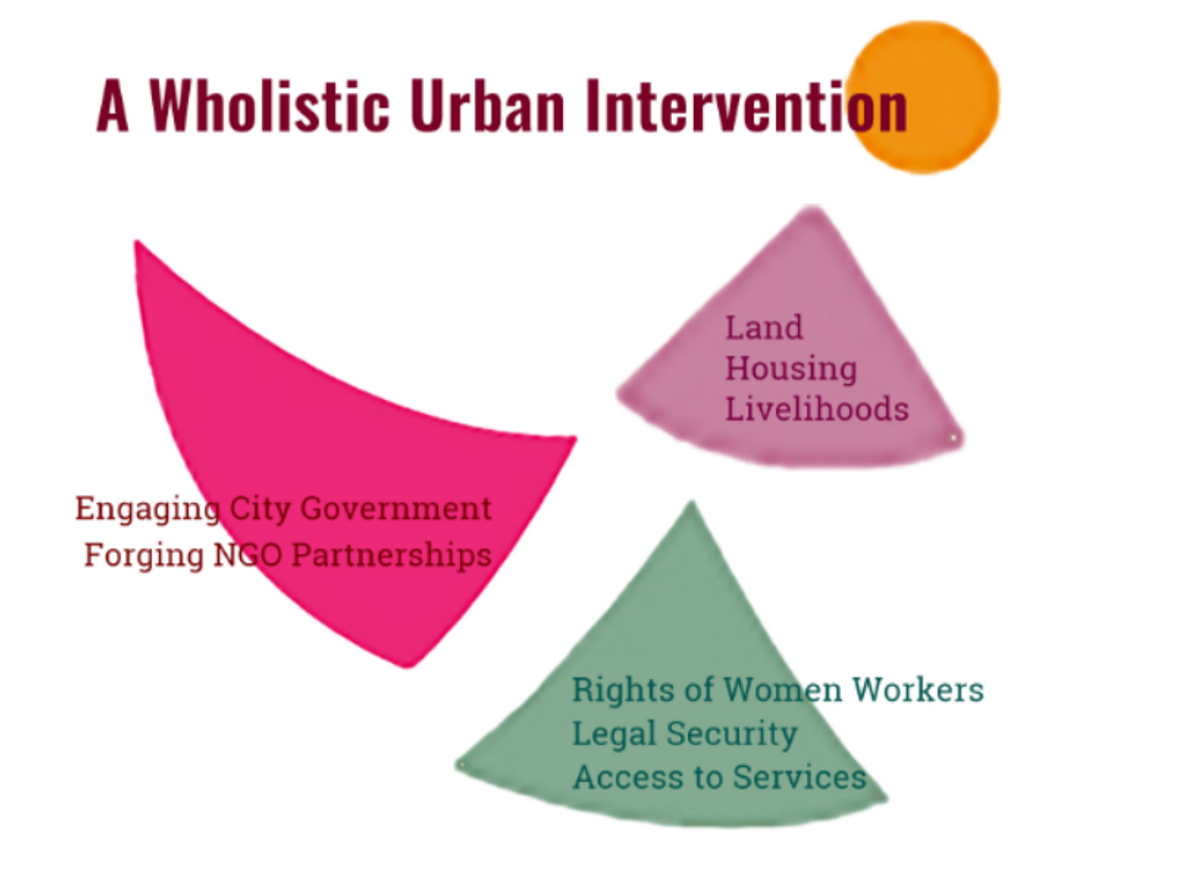
Housing, Land Rights, Livelihoods: Focus of the urban intervention
A collective housing movement was sparked by fears repeatedly articulated by women living in slums – they had no legal documents to their modest dwellings. The housing movement has worked through multiple processes – securing land rights for slum dwellers, forming housing committees with women in the lead, providing construction loans through SHGs, and in the first phase, building 126 houses with people’s participation in design and construction. After this, 314 owner-driven houses were successfully constructed through government housing schemes in three areas of Bhuj - Bhimrav Nagar, Ramdev Nagar, and GIDC area. Hunnarshala Foundation was the key implementation and technical partner.
KMVS has also, over fifteen years, explored new livelihood options for women – door-to- door waste collection, in collaboration with the municipal corporation; auto-rickshaw (chakda) driving for young women; provision of home management services and craft-based income generation.
Expanding the housing intervention raised a question - How could people build permanent houses on land they did not own? An old government circular of 2003 was unearthed - within certain criteria it allowed slum dwellers to apply to government for ownership rights to land they had inhabited for decades. KMVS provided information and facilitated a process, leading to the Jamin Awas Adhikar Manch (Land and Housing Rights Forum), an informal collective of slum residents, led by women. So far, 1400 people have submitted applications to government for land rights.
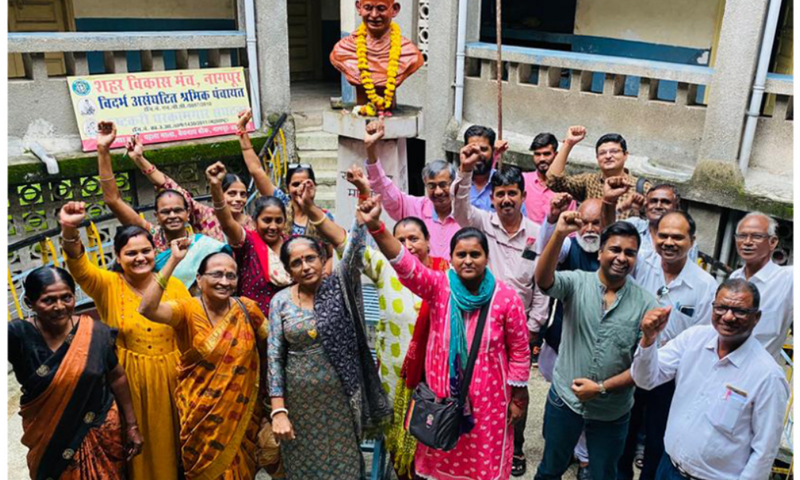
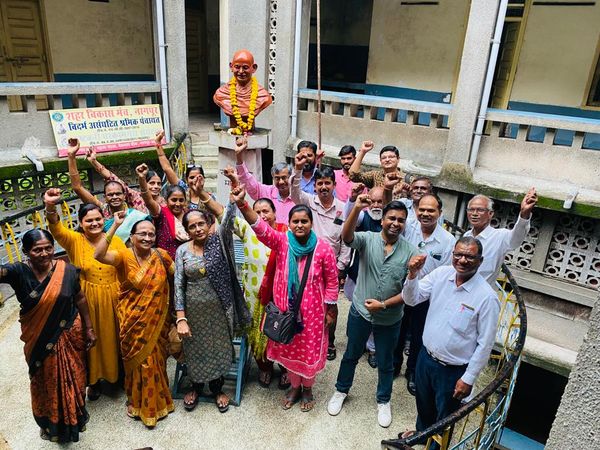
Amrutben plants a flag of urban resistance in Pithora Peer
Challenges of Shifting Cityscapes
Maru Shaher has helped thousands of poor families, but long-term issues need sustained, collective work. Development projects threaten street vendors in new ways, and migrant labour continues to need support to find housing, education and secure incomes. Women live not just at the centre of these families but at the centre of this urban crisis, and so they must be at the centre of the solution. That is Maru Shaher’s continued commitment to the poorest women of Bhuj, even as the programme now expands its work to Anjar city, in the neighbouring taluka.