
Paralegals are the core of Hello Sakhi. They are trained on gender issues, constitutional rights, legal provisions, the judicial structure, and in communication skills to engage sensitively with survivors. Five hundred paralegals work locally, within their own communities, providing survivors a safe space to speak. Of these, an elite cadre of 60 paralegals support 300 villages across all 10 blocks of Kutch. Forty one KMVS paralegals have so far been certified by the DLSA, under the National Legal Services Authority scheme for paralegal volunteers.
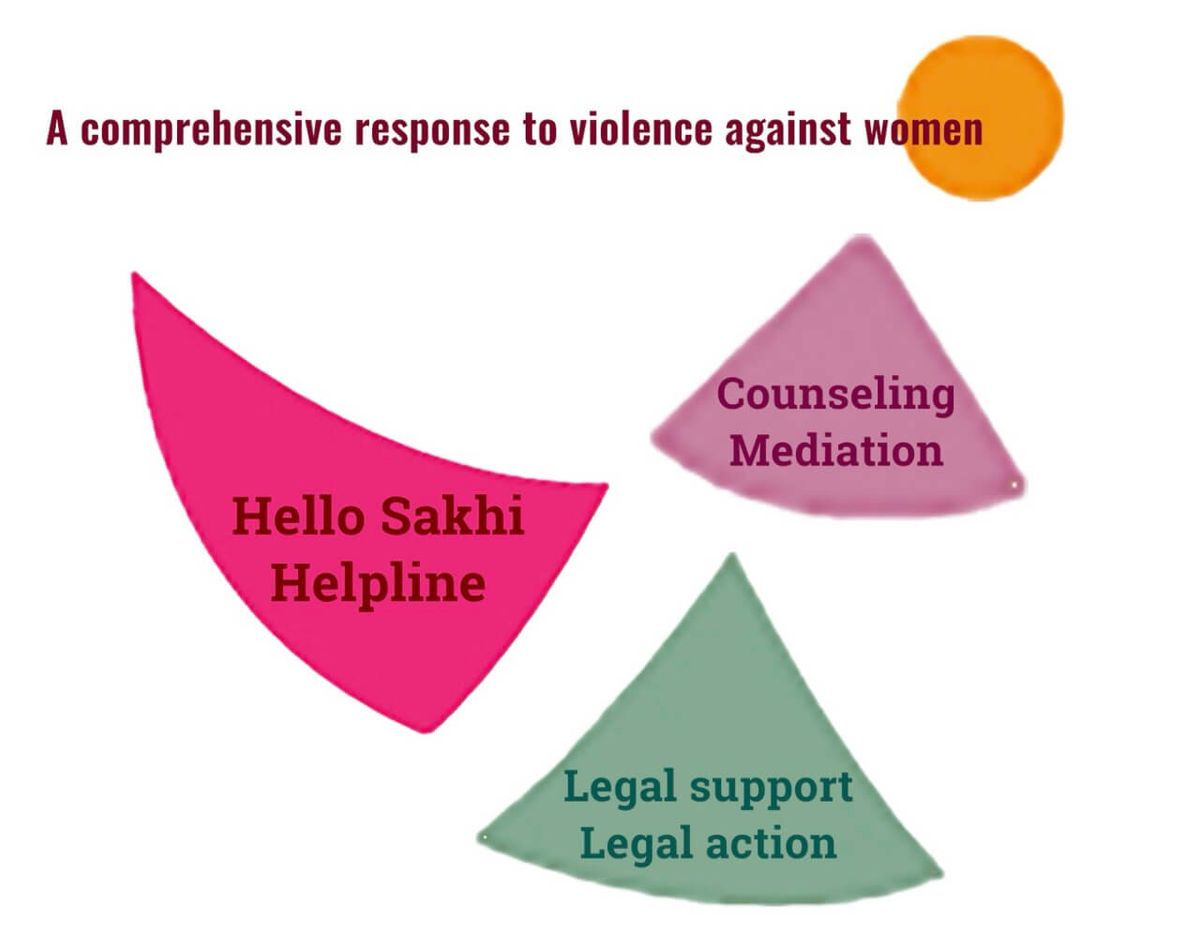
Hello Sakhi is a comprehensive intervention to address violence against women (VAW). Starting in 1991 with four block-level family counselling centres, today the programme has a helpline, counselling, mediation and legal support for survivors; and conducts awareness campaigns across Kutch District. Hello Sakhi aims to break the culture of silence surrounding VAW, creating conditions for increased reporting of such violence. A 'Safe District' is Hello Sakhi's core watchword and vision.
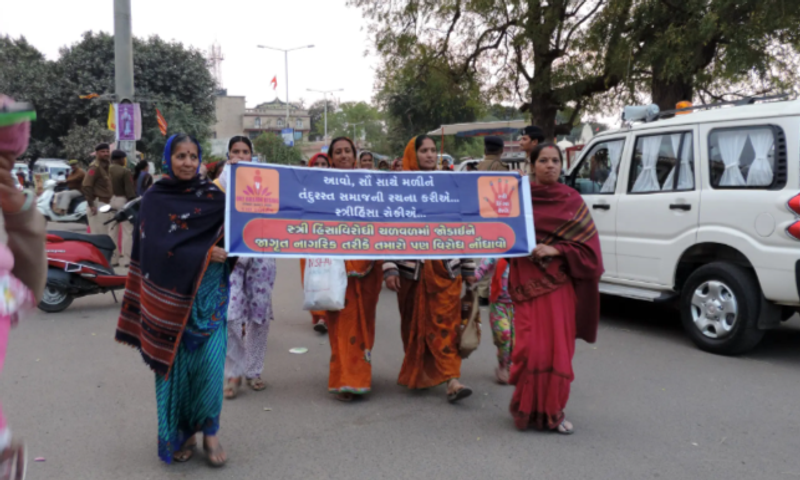
The programme works in close collaboration with the judiciary, the District Legal Services Authority (DLSA), the police department, and community conflict redressal forums. It makes survivors aware of their options and enhances their ability to access justice.
The need for Hello Sakhi is evident from the numbers. Between 2010 and 2015, the helpline registered 2,647 cases. This jumped nearly four-fold to 10,036 cases between 2015 and 2023. Ten percent of these cases enter litigation in family courts. They are handled by a panel of five lawyers, four of whom are KMVS full-timers.
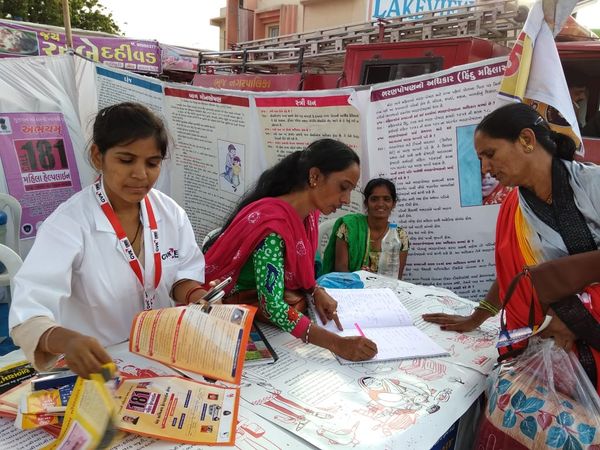
A day in the life of a paralegal changing gender norms across 200 villages in Kutch for two decades*
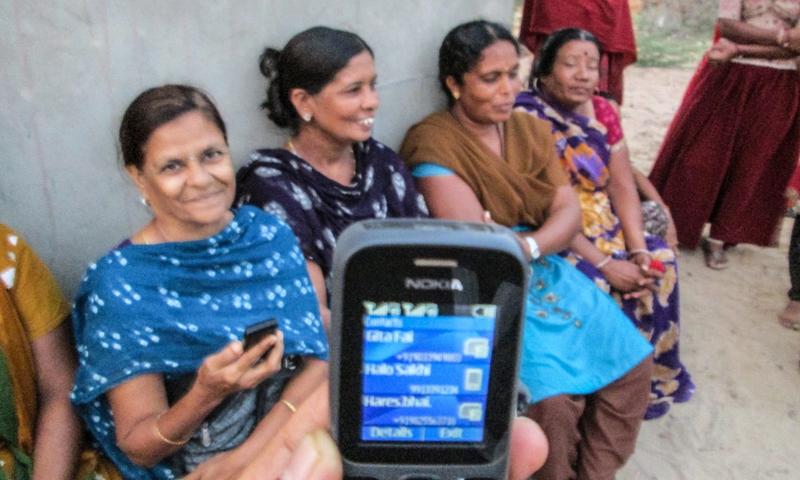
Hello Sakhi Helpline was launched in 2010 in collaboration with the West Kutch District Police. Providing round-the-clock immediate response, it is the first line of help for women in distress. Safety Centres are a vital link in the chain of support. Five centres (one for every two blocks) provide immediate counselling, mediation and litigation advice. Cases come to the centres through community paralegals and the Hello Sakhi helpline.
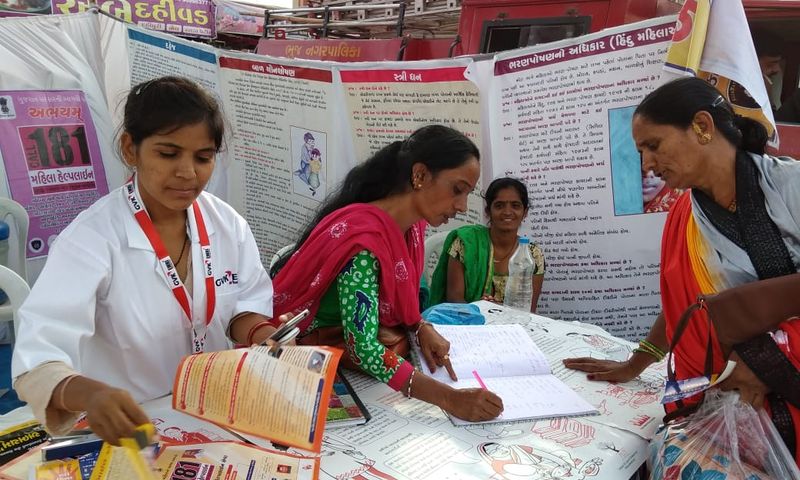
Safety Campaigns cover all 900 villages in the district, to raise awareness about VAW, sensitise the community and publicise the Hello Sakhi helpline. This public outreach is reinforced by paralegals and counsellors conducting door-to-door visits and neighbourhood meetings, to talk about violence, aiscuss cases and crisis response strategies. This helps build relationships of trust with women in the community, enabling them to report cases of violence.
Breaking the silence
Samina Bai, of village X in Anjar taluka, suffered from stage 2 kidney failure, needing dialysis thrice a month. After her husband's death she spiralled down into severe financial distress because of her illness. She was forced to do wage labour and pull her 3 children out of school. Things worsened when her in-laws provoked altercations to forcibly evict her and her children. Samina Bai finally found courage to report the violence to the Anjar Safety Centre, where paralegals started the process of proving her ownership of her late husband's house and claiming inheritance rights for the children. Nasim Ben, a paralegal, coordinated with the Talati of Tuna Gram Panchayat to verify documents of ownership and appeared in a Bhuj court on Samina Bai's behalf. The in-laws eventually returned possession of the house and agreed to give monthly maintenance of {5000. Samina Bai's struggle and strength has inspired many women to speak out and seek help. *Name changed for privacy
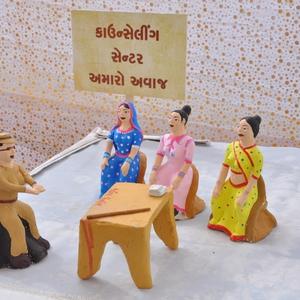
Safety Center
Anjar