
Yuva Pahel KMVS mobilises young adolescents outside educational spaces, in urban slums and rural areas, building their understanding and agency to challenge gender and sexuality norms. A core group of youth leaders undertakes public campaigns.
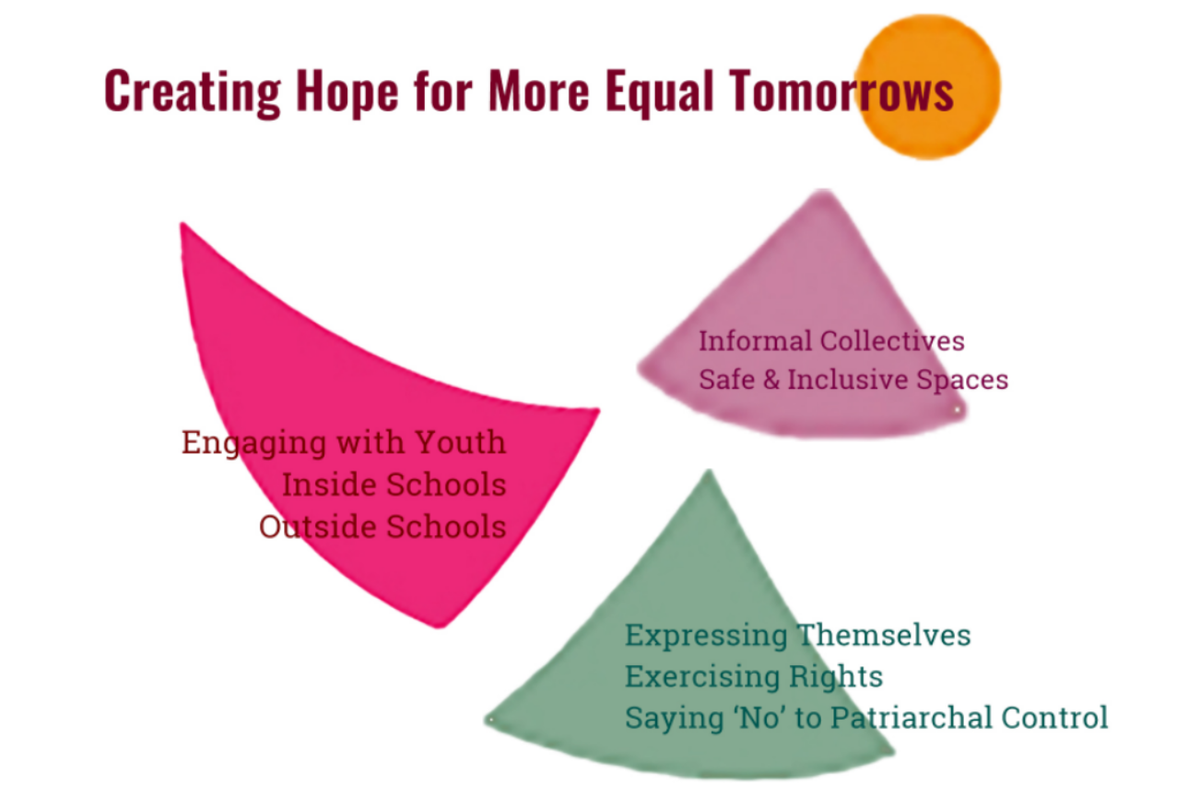
Kutch's vast geography, a high dropout rate for girls at secondary level, prevalence of early marriages and limited mobility, leave adolescents deprived of agency and life choices. This is where Yuvavani comes in, engaging with the youth, inside and outside formal schools, to build an understanding of gender and patriarchy. It brings them into informal district level collectives; creating safe, inclusive spaces, where young people discuss shared concerns, express themselves, learn to exercise their rights and say 'no' to patriarchal control. The programme has directly reached nearly 1000 young people in five blocks, and developed a core cadre of 80 adolescents.
Gender Inclusive Schools
KMVS' Memorandum of Understanding with the Department of Education and the District Institute of Education and Training enables it to formally engage with schools. Since 2017, Yuvavani has worked with 100 primary and higher secondary schools, 65 percent of which are co-educational. It is currently working closely with 45 schools.
School interventions are planned for a four-year period, including 10-12 intensive sessions with students (aged 11-16), three teacher training sessions, and two campaigns.
Gender and Inclusivity Audits are a key part of the intervention - students, teachers and KMVS facilitators collectively map the infrastructure, class room practices and school rules, using a gender lens. This helps visibilise schools as sites of reproduction of gender-based norms and biases, and informs subsequent sessions on gender with students and teachers.
Ek Sanjh Mari Sanjh: In 2023-24 this campaign on mobility and choice, was taken to 600 young girls across 60 villages in Kutch, culminating in a grand event by the Hamrisar Lake in Bhuj. Here, young people experienced the joys of a carefree evening and celebrated their agency through poetry, theatre, art and dance.
Early marriage: A three-year long campaign (2019-2022) created public dialogues around under-age marriages, with children, parents and local institutions like panchayats and schools. All stakeholders took an oath to end child marriages in their communities so that children may pursue dreams and determine their own futures, instead of being shackled by unwanted, non-consensual marriages.
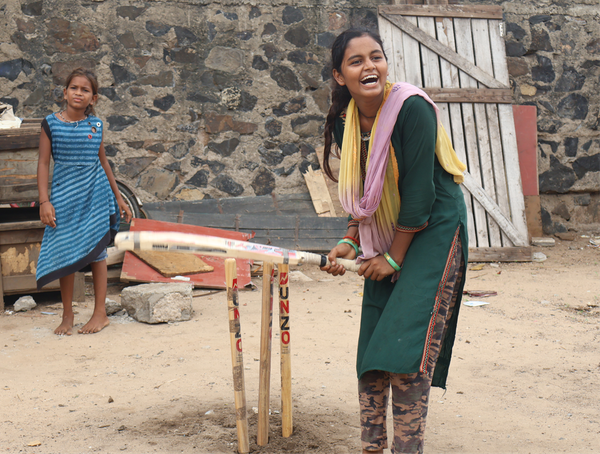
Hey, Virat Kohli… Have you ever played cricket on a wicket quite like this?
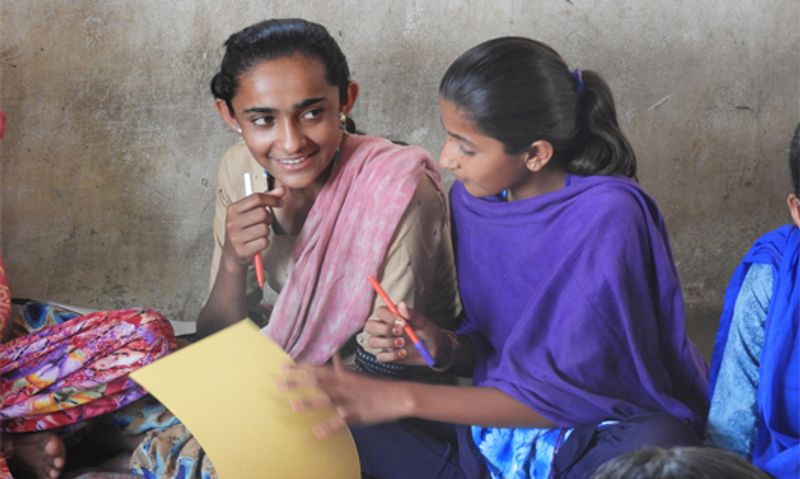
Akhar Centres : These spaces enable adolescent girls who have dropped out of school to reintegrate into formal education, and rediscover their aspirations.
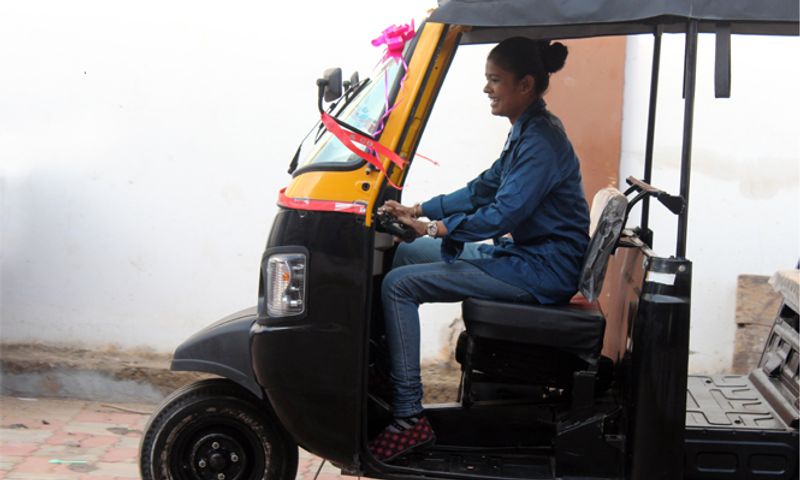
Non-traditional Livelihoods : Yuvavani encourages adolescent girls to break free from gender norms, and get skilled in non-traditional fields like chakda (auto-rickshaw) driving, photography and rural journalism. In collaboration with several training centres, these courses are especially curated to build technical and social skills.
Youth speaks
Having to stop studying was like losing my way in life. I rediscovered my path through the Akhar Centre. KMVS became a part of my life. And a new journey began - from being a young girl, a kishori, to a youth cadre member; from sharing with other girls like myself the KMVS platform and feminist lens that I acquired through the Narivadi Dhara course, to joining Talaash Zine as contributor and editor; from making my own thinking the basis of my journey, to the act of writing. This journey goes on. It never stops ...