
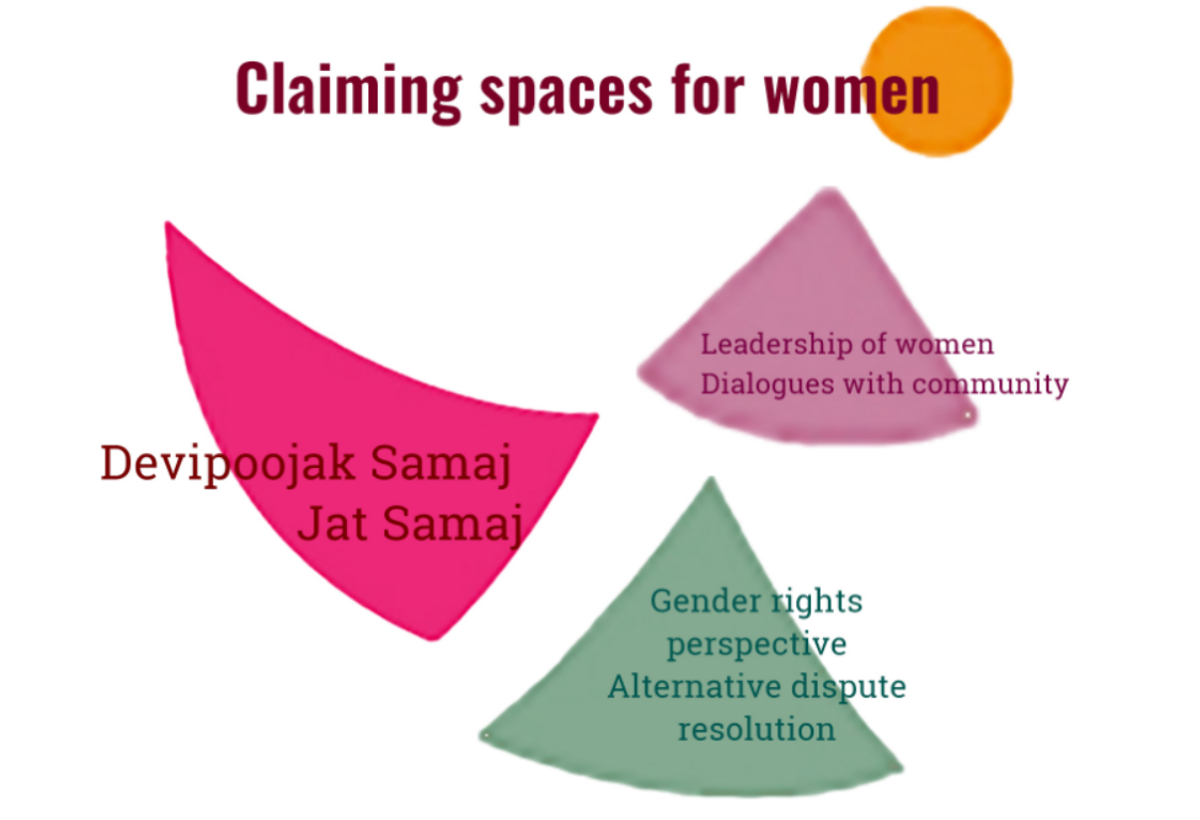
Community members are urged to reflect, and reform customary laws and practices that place limits on women and girls, or lead to violence against them. Samooh Lagns (community sponsored mass marriages) were questioned for compelling under-age girls into marriage; in 2023 the Jat Samiti successfully stopped a lagn involving several under-age girls. A vocabulary of consent in marriage has now been established. Dialogues facilitated by KMVS between the Devipoojak and Jat samaj, motivate leaders, women, and girls from both communities towards internal social change.
Caste-based Panchayats are entrenched, patriarchal, community-based institutions, exercising enormous control over women's lives in large parts of India. In recent decades, enhanced identity-based consciousness in these panchayats has led to enforcement of even more stringent traditional gender norms. KMVS has been working in Bhuj with the Devipoojak Samaj since 2016, to dialogue with comm
unity leaders; build leadership of women and young girls; help them negotiate space; build a gender rights perspective within a traditional system; and create alternative dispute resolution mechanisms that respect women's voices. In 2020 KMVS also started working with the Jat Samaj.
Nurturing Leadership
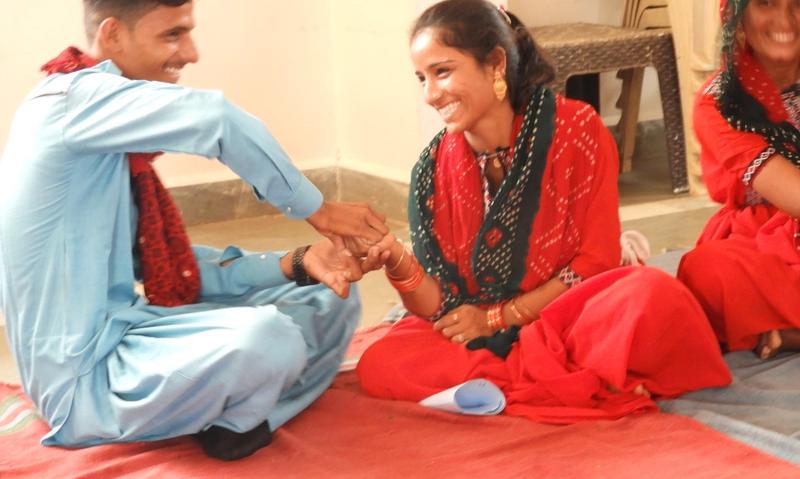
KMVS' two entry points into the Devipoojak community were self-help groups for women, and a housing project under the Rajiv Awas Yojana that benefitted the entire community. These interventions created trust, and led to the emergence of women leaders ready to drive positive change in their community. The process consciously included male leaders and youth, sensitive to women's circumstances.
Today, a 22-member samiti (13 women, 9 men) in the Devipoojak Samaj, and an 11-member samiti in the Jat Samaj, leads the intervention. These samitis are nurtured by KMVS through perspective building on gender rights, alcoholism, violence against women, legal and constitutional rights.
From Dialogue to Action
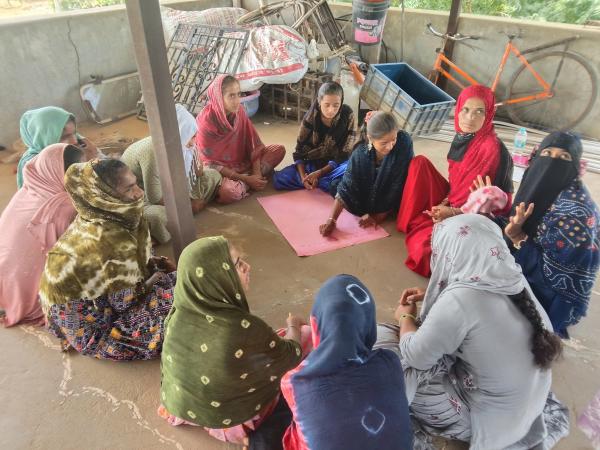
Contentious social issues, like male-dominated community norms and redressal systems, early marriage, girls education, as well as land and housing rights, are discussed in meetings and workshops. Women and girls speak of hindered lives and limited choices. Young married couples participate in safe sex trainings.
Alternate Conflict Resolution Mechanism: Takrar Nivaran Centre
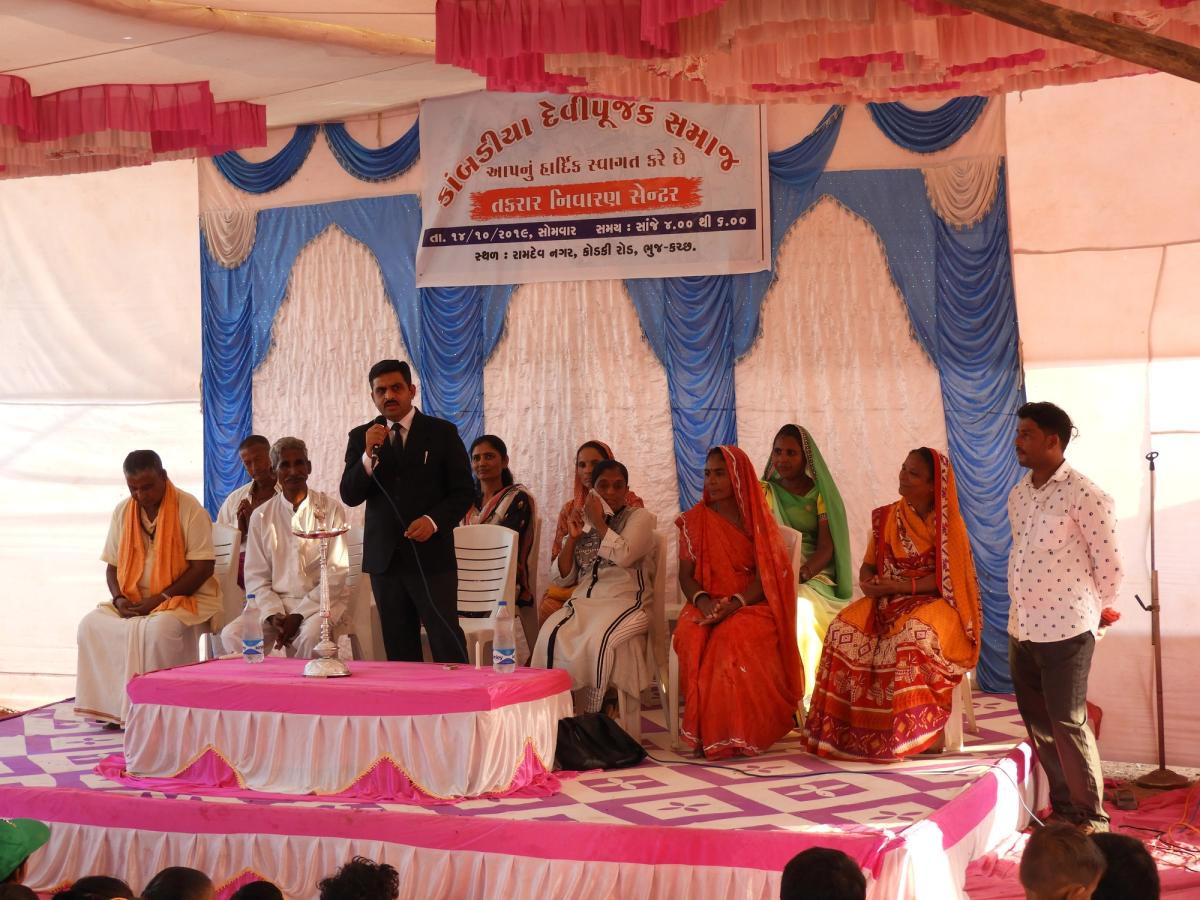
On October 14, 2019, a novel community-based dispute resolution centre was inaugurated by the District Judge of Kutch. The Takrar Nivaran Centre is managed by 6 paralegals (3 women, 3 men) from the Devipoojak community, trained in law, and linked to the District Legal Services Authority. While the traditional panchayat had no place for women's concerns, this does, because it is animated by a framework of constitutional rights. Operating once a week, the Centre has handled over 100 domestic disputes so far, free of cost, saving women approximately Rs. 8 lakhs in penalties and panch fees (charged by traditional panchayats). Supported by the district judicial system, it runs with the cooperation of the Devipoojak community. Apart from efficient redressal, the Centre's purpose is to inject a gender-just constitutional and legal rights framework into traditional redressal mechanisms.
How an autorickshaw driver made high school dreams possible for girls of Sumrasar
Community speaks
"For us to demand our rights, to have a say in matters pertaining to us, it was important to have a seat within traditional panchayat spaces. We felt that having women in decision making will enable girls and women from the community to speak freely about the day-to-day issues they go through. Because their issues are not a priority in any other forum."