
1989
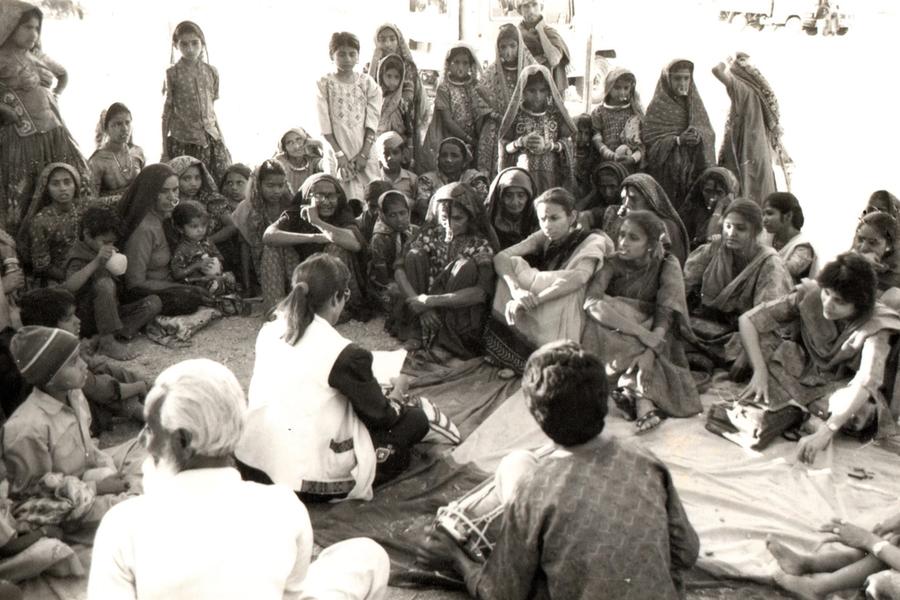
KMVS is registered. Sushma Iyengar is the prime mover and KMVS’ first executive secretary. Joining her to work with the craftswomen of Kutch, are Alka Jani and Meera Goradia. The founding sponsors are GSHHDC,* Commissioner for Women and Child Development and Janvikas (NGO).
*GSHHDC: Gujarat State Handloom & Handicrafts Development Corporation Ltd.
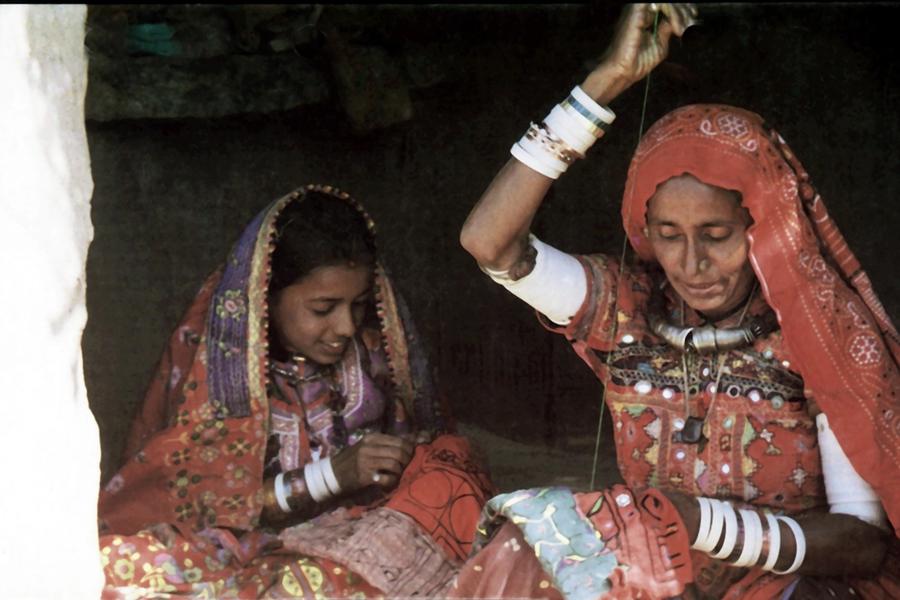
Organising women artisans to upend the gender hierarchy begins in Pachcham. It is a craft rich hub, where women are commissioned as piece rate workers earning low wages, while male artisans and middlemen control tools of production, acquire raw material, access the market, mark up the final product by 200-300% and reap the profits.
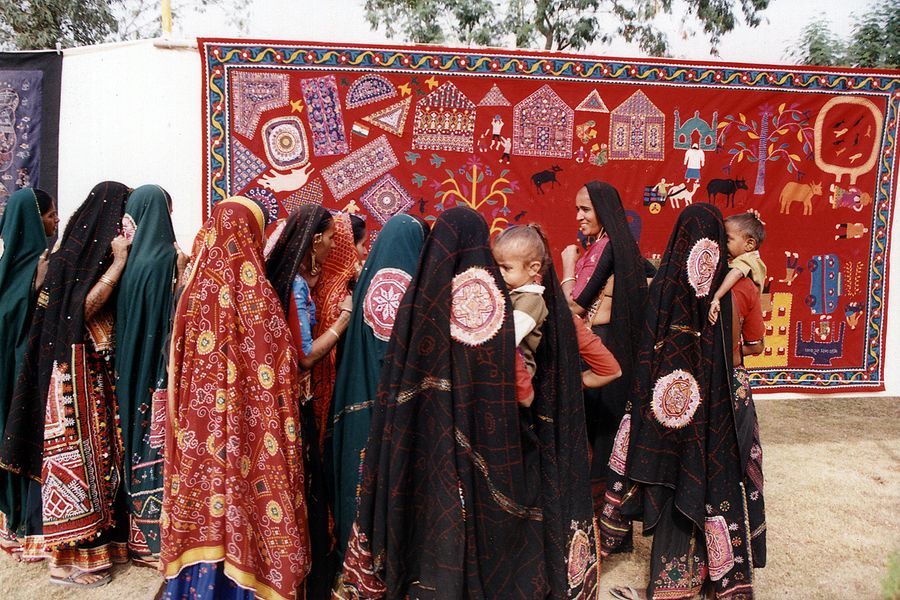
Thirty four women artisans travel outside their villages for the first time, to deliver a powerful message to urban consumers at a handicraft exhibition in Delhi. They carry large quilts embroidered with stories of their lives – gender division of labour, environmental destruction, exploitation. It is a landmark moment for Kachchi women artisans to end exploitation by middlemen, and get recognition for their craft.
1990
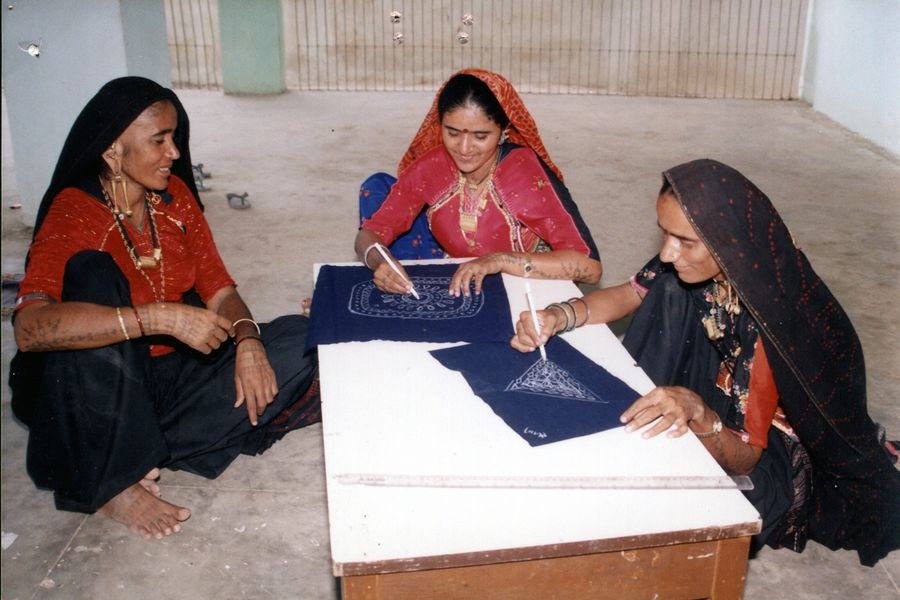
Mahila Mandals (women’s groups) are formed and trained in raw material acquisition, accessing credit, quality control, and marketing. Women craftworkers assert their status as artisans, working closely with GSHHDC to ensure a fair market.
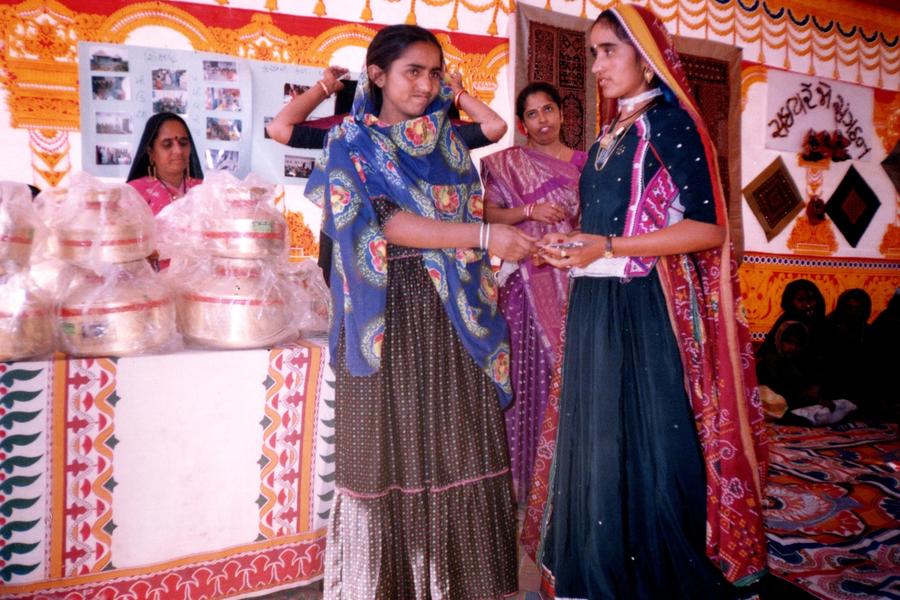
Memorandum of Understanding between GSHHDC and KMVS is operationalised. GSHHDC becomes the main buyer of Kutchi embroidery produced by the Mahila Mandals. It agrees to eliminate the middlemen and buy directly from KMVS.
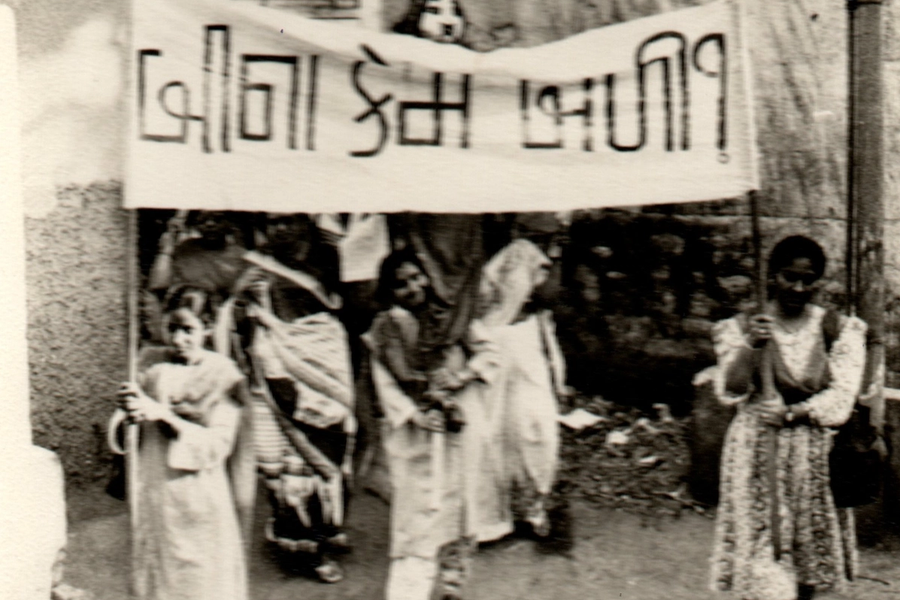
The first public rally by KMVS women against rising dowry murders and domestic violence in Bhuj. Banners and posters demand an answer to the simple, searing question – ‘Why was she burned?’
1991
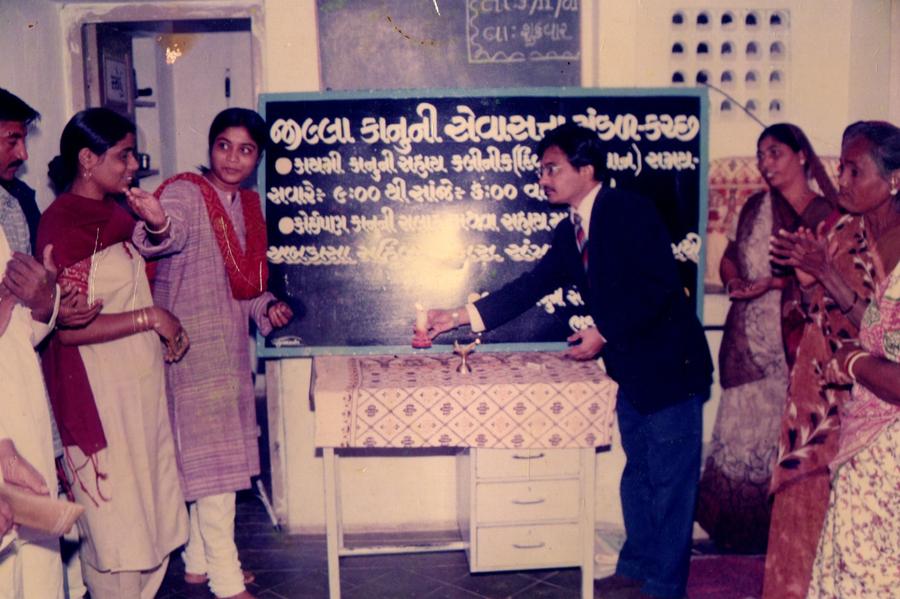
Family counselling started in four blocks, in response to the emerging issue of domestic violence. The centres become spaces that women can call their own. Where they can share vulnerabilities, feel safe and seek help. The centres also birthed the first paralegal volunteers who became the face of the movement against violence.
1992
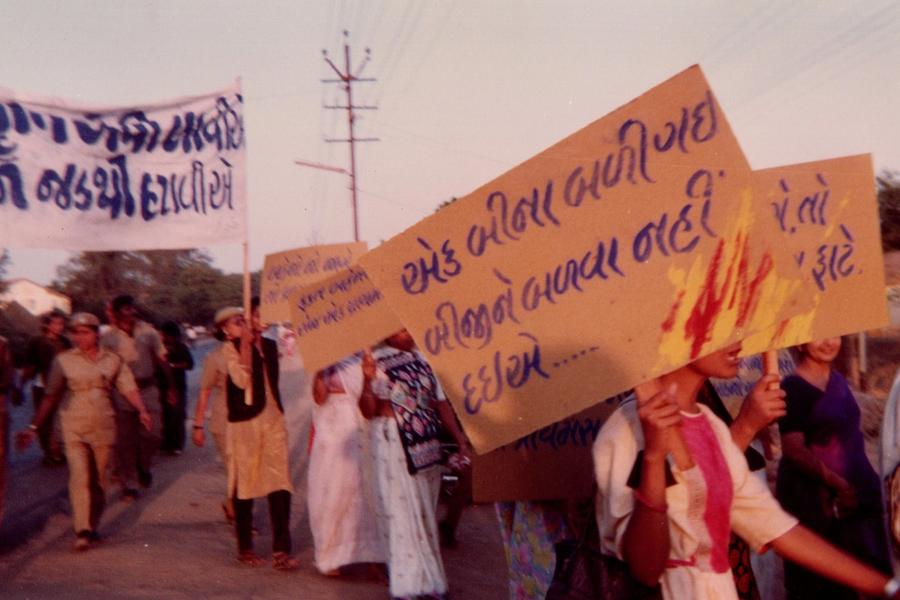
Vanku protest begins. A community meeting in Vanku Village of Abdasa reveals a shocking fact - domestic violence had pushed 40 young women to suicide in one month. The issue mobilises the entire community. A protest rally travels through the main market. Domestic violence emerges, out of the personal and into the public, as a women’s rights issue.
1993
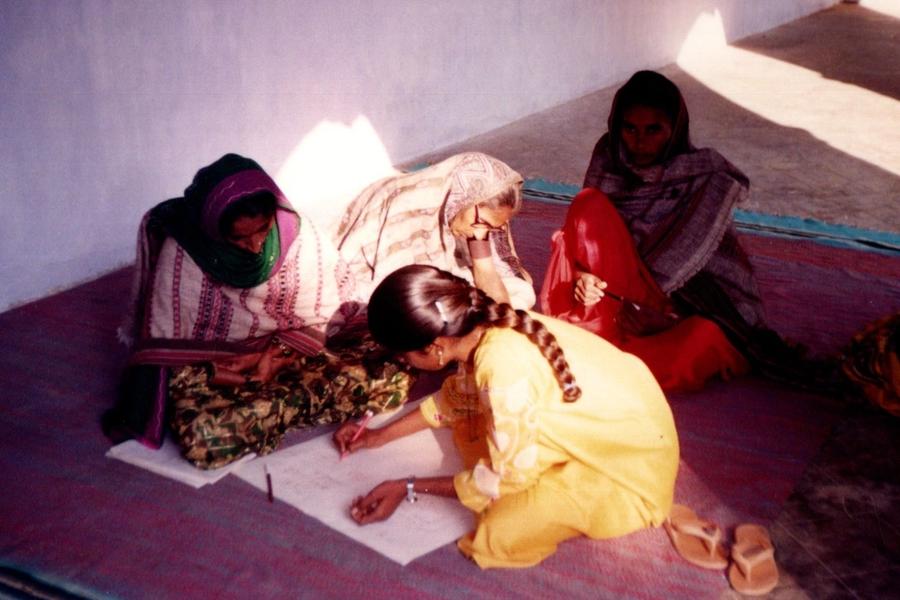
Women demand literacy to communicate with the wider world, embarking upon a journey of experiments in creative learning for adult women in Pachcham. Novel pedagogy, ground-up modules and curricula are developed with Nirantar (Delhi-based NGO). Broken bangles of different shapes are used to teach the alphabet in village ratrishalas (night classes).
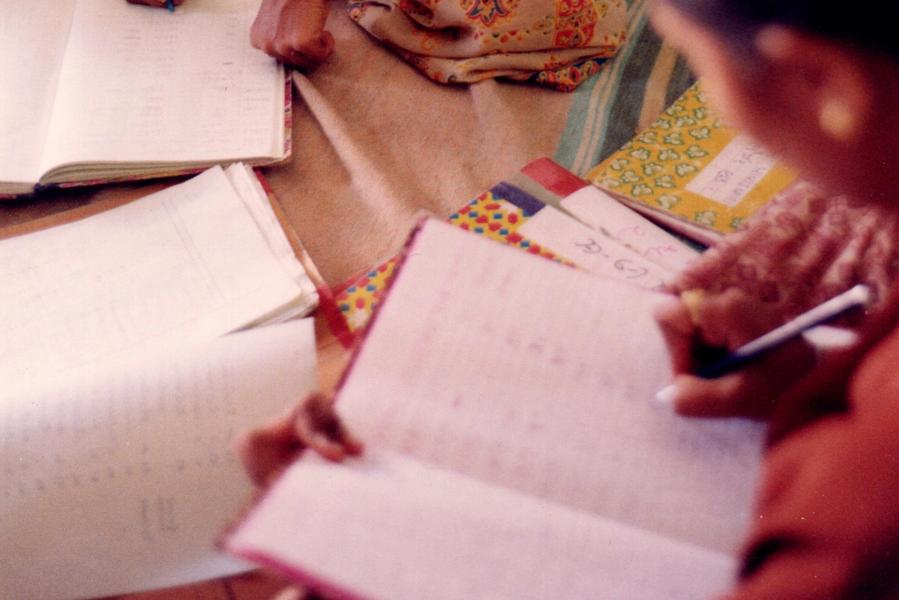
UJJAS is born. After women learn to write, they start a newsletter - by rural women, for rural women. Handwritten and photocopied, UJJAS becomes the voice of the sangathan, mailed to all members, garnering a vast female readership in the interiors.
1994
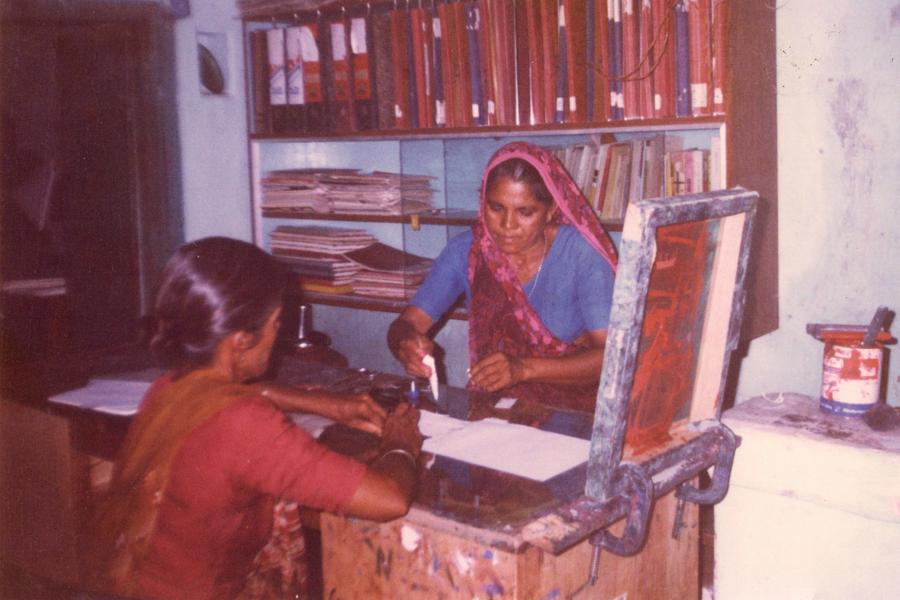
Screen-printing unit is set up. Breaking moulds, barging into male domains, women in Mundra are trained in screen-printing, with Meghiben Samadiya in the lead. UJJAS Newsletter shifts from photocopied to screen-printed. The unit becomes a non-traditional income generator - printing and marketing greeting cards, designed with embroidery patterns and illustrations of local flora and fauna.
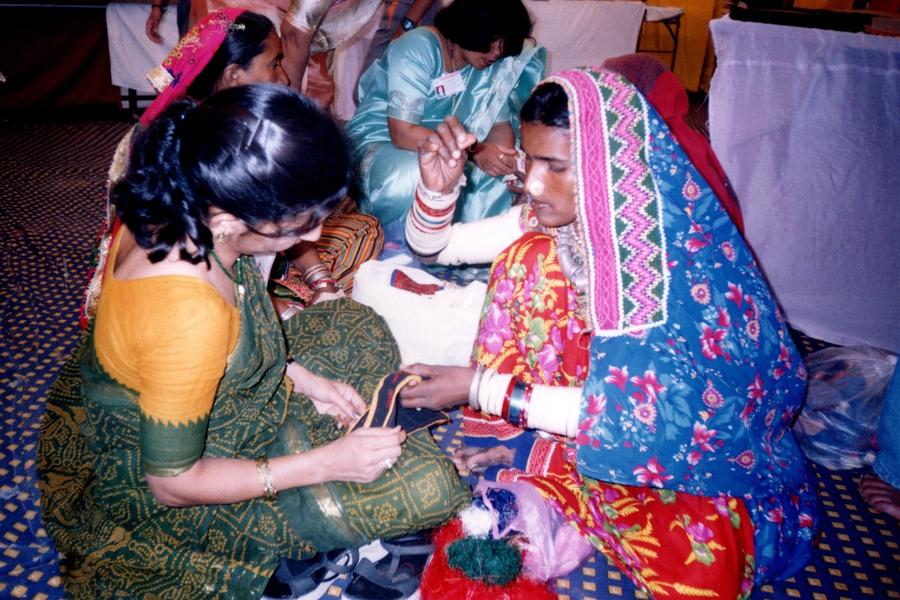
Qasab becomes a brand. Craftswomen of Pachcham sangathan begin branding and marketing their products as Qasab (‘crafting skills’ in the Kachchi language) They are helped to develop brand identity through brochures, tags and packaging.
1997
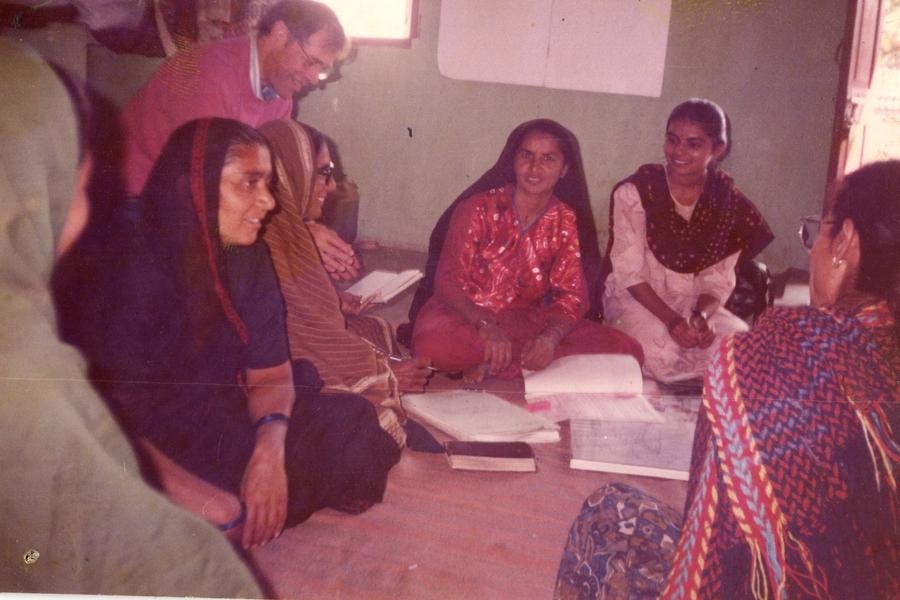
Work begins with women in local panchayats, after scores of women get elected following the 73rd and 74th amendments to the Indian Constitution in 1992, that reserve 33% seats for women in local bodies. 124 women sarpanches from Kutch participate in the massive Gujarat state level ‘Apno Avsar’ event in Ahmedabad.
1998
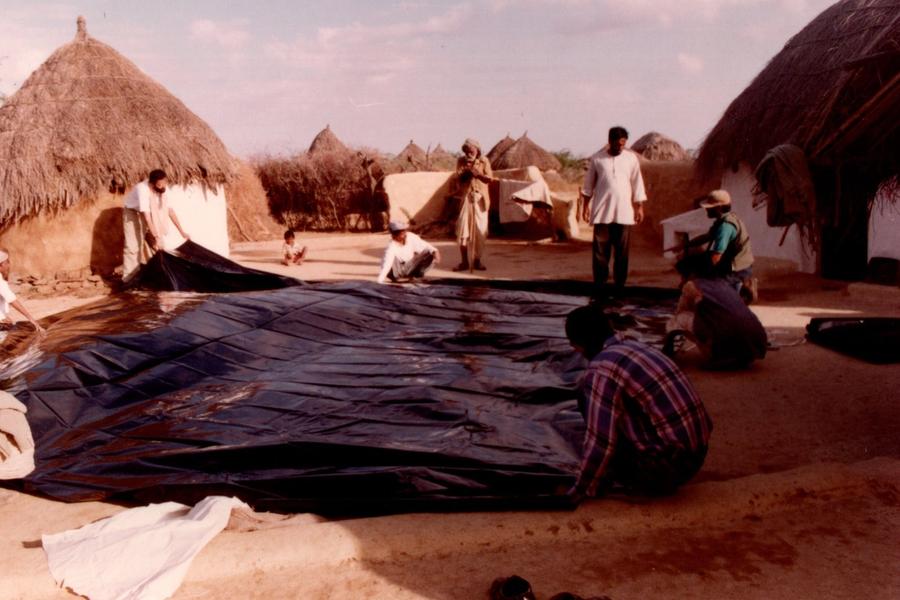
Relief and rehabilitation work takes precedence, as KMVS responds to the catastrophic impact of the Gujarat cyclone, with all hands on deck.
1999
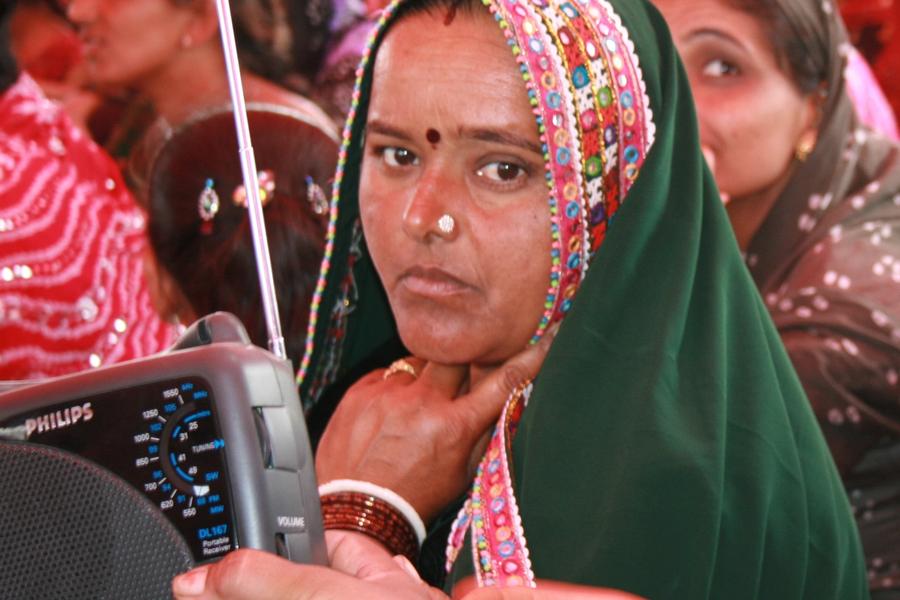
UJJAS unit enters the airwaves through community radio. Responding to the needs of elected women in panchayats, KMVS launches a weekly radio docudrama serial, Kunjal Paanje Kachchh Ji on All India Radio, Bhuj. Developed with help from Drishti (Ahmedabad-based NGO) it completes 53 episodes.
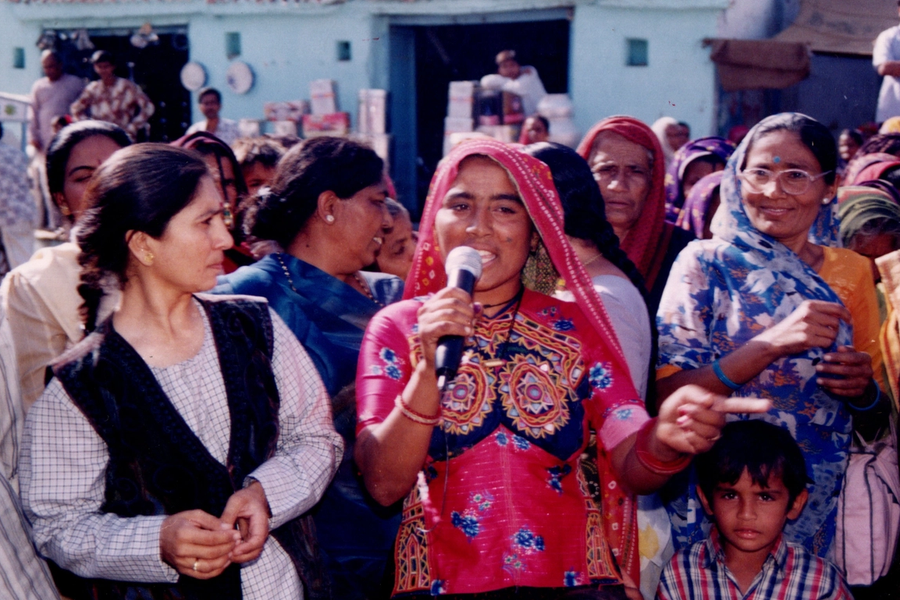
Historic women’s rallies take place in Abdasa and Mundra on alcohol consumption and violence against women. An entire town watches, as women from the conservative Darbar community raise slogans and smash earthen alcohol stills before stunned officers at the local police station in Mundra. It’s a media moment. KMVS emerges in the public eye as a women’s rights organisation to reckon with.
2000
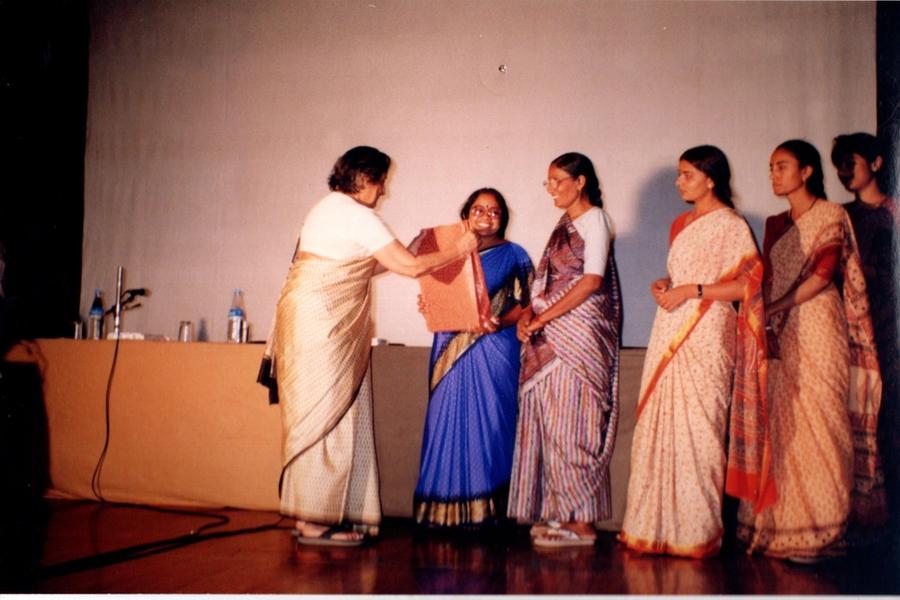
KMVS wins the prestigious Chameli Devi Jain Award for Kunjal Paanje Kachchh Ji. The citation hails it as an ‘innovative and pioneering community radio initiative,’ and ‘a communication model worthy of emulation.
2001
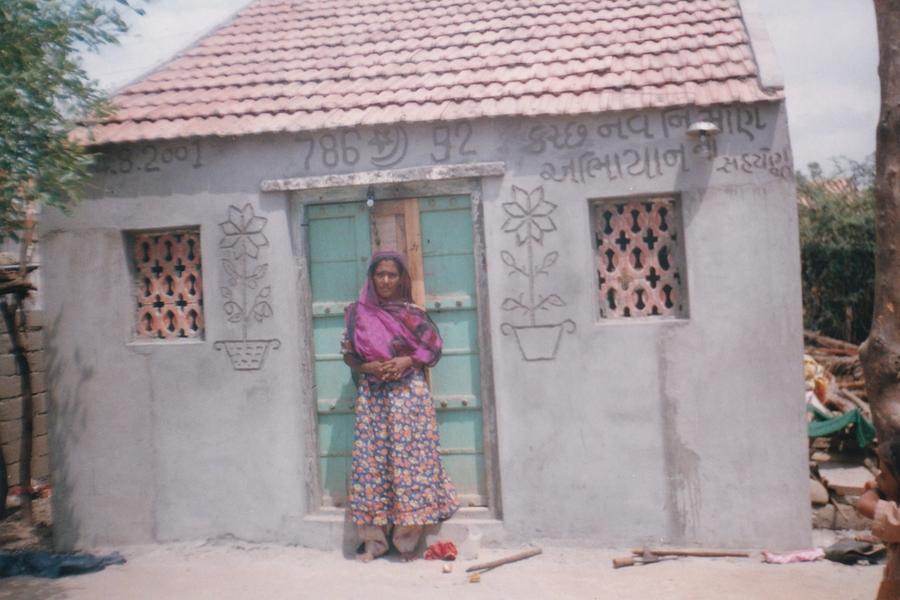
Community-based rehabilitation takes priority as KMVS, in partnership with Kutch Nav Nirman Abhiyaan (a collective of Kutch-based organisations), responds to the devastation caused by the Gujarat earthquake. Owner-driven reconstruction and environment friendly design processes are led by community women.
2004
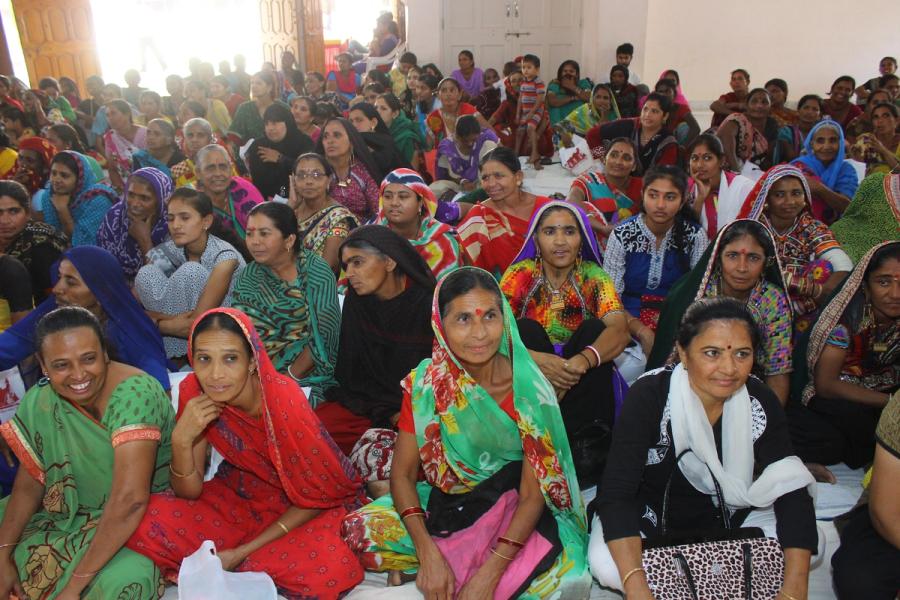
Formal registration is done of two rural women’s collectives of KMVS (Ujjas Mahila Sangathan in Mundra Block and Saiyere Jo Sangathan in Nakhatrana Block). They become independent organisations.
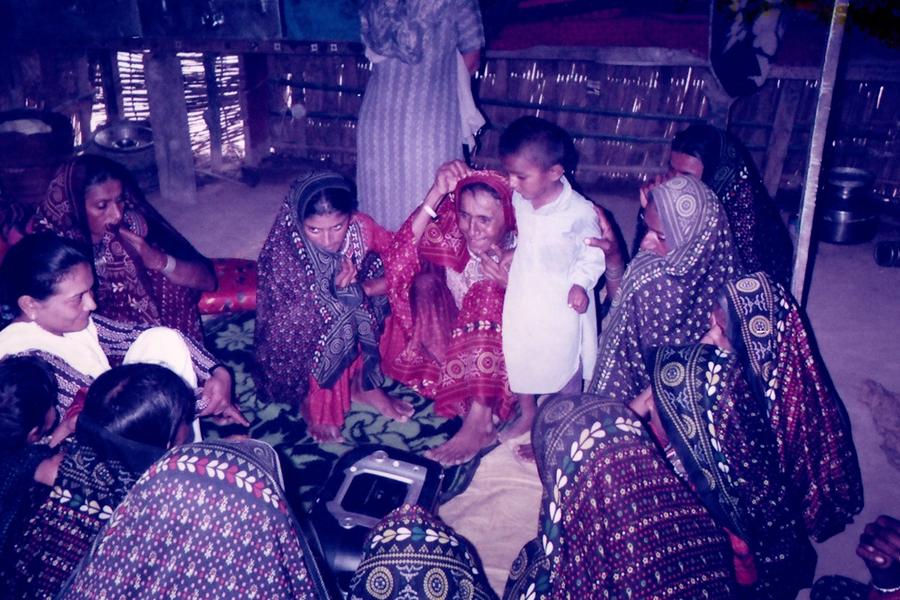
Jedle Jo Jatan, a unique health centre, is started by women from the Paccham sangathan, in a remote area with no health services. Led by Parmaben Sava, a traditional dai (birth attendant) the centre is supported by government and run entirely by sangathan women.
2007
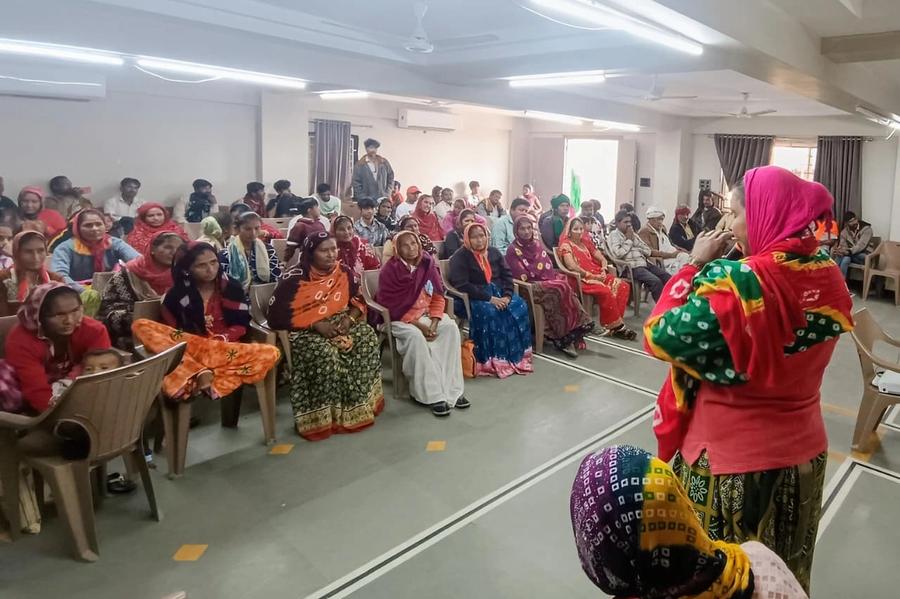
The first urban intervention begins. Having worked only with rural women in the vast hinterland, KMVS expanded its horizon, to include poor women labouring in the city, and living in the slums of Bhuj. A new area of urban work emerged, with its own challenges, demanding new organisational strategies.
2008
Qasab is registered as a producer company. The Qasab Kutch Craftswomen Producer Co. Ltd. becomes an artisanal cooperative of 1500+ rural women embroidery artisans from 11 ethnic communities across 65 villages in the arid interiors of Kutch.
2010
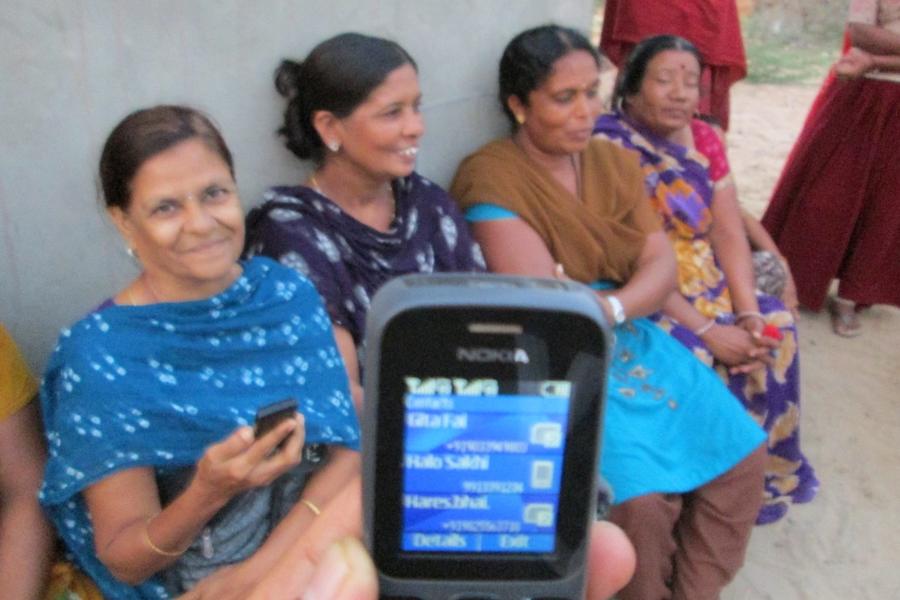
Hello Sakhi Helpline is launched in collaboration with the West Kutch District Police. Providing round-the-clock immediate response, it is the first line of help for women in distress.
2013
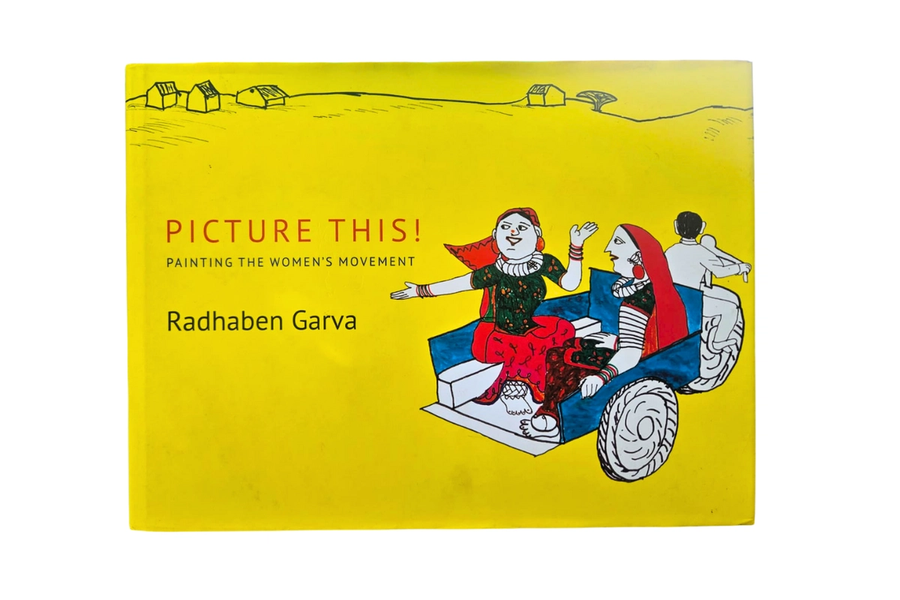
Radhaben Garva’s book of illustrations, Picture This! Painting the Women’s Movement, is published. Radhaben, from a Dalit community in a small village, started her journey with KMVS in the 90s, illustrated for Ujjas, and emerged as an artist documenting the rural women’s movement, in a unique style suffused with the vibrant colours of Kutch.
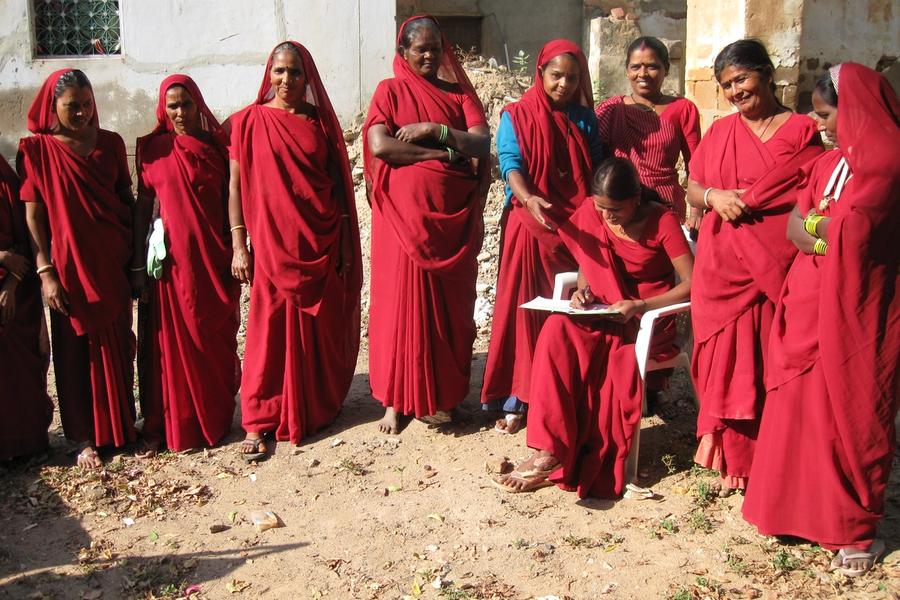
Urban self help groups started by KMVS in 2009 are registered as an independent community based federation called Sakhi Sangini Sangathan.
2014
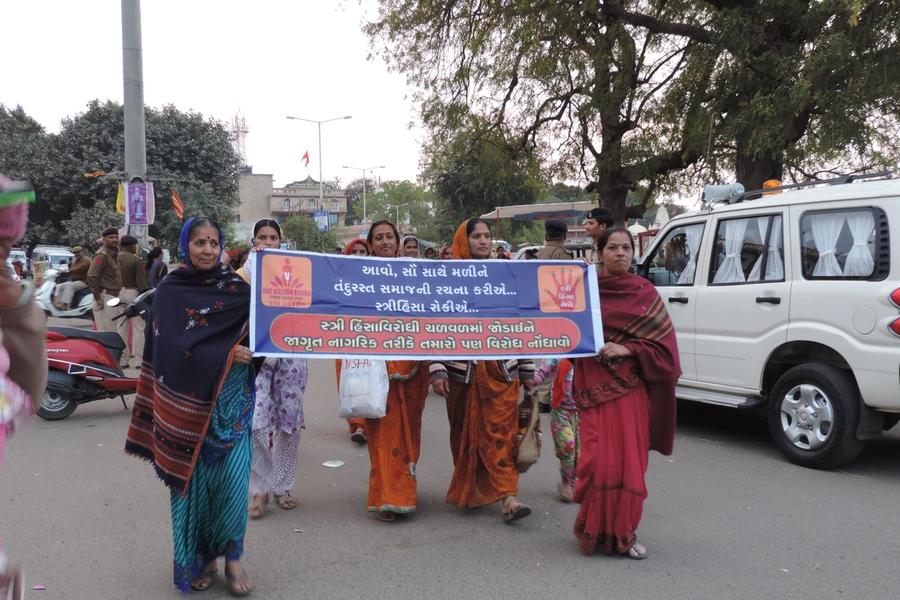
‘Goonj Movement’ against violence, started by two KMVS rural collectives, becomes a district wide movement against alcohol brewing, impacting over 100 villages. Khataben Sameja plays a key role. In a historic media moment, 11 women survivors of alcohol related violence share personal stories publicly before a 7000-strong crowd in Bhuj.
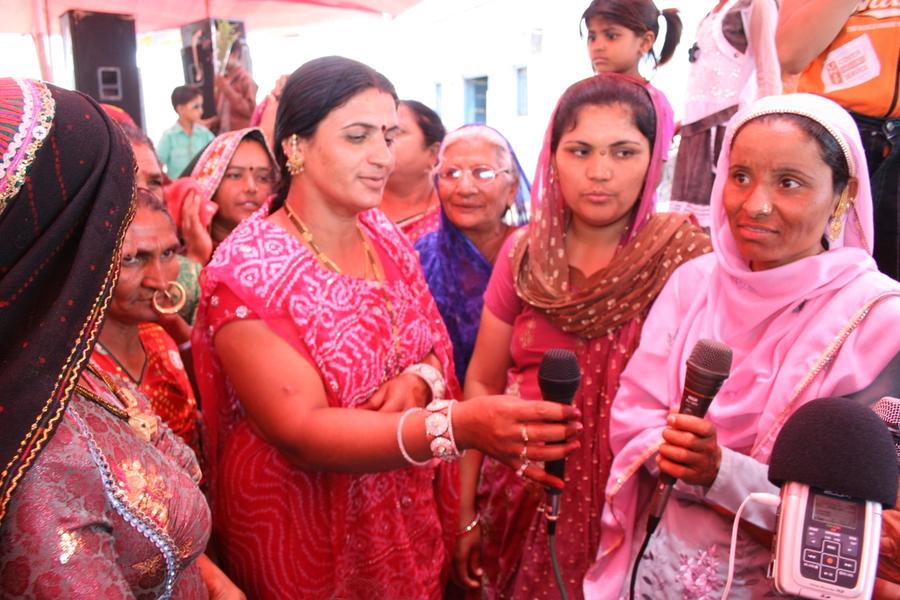
Saiyere Jo Radio an FM radio channel, broadcasting from Bhimsar village in Nakhatrana Block, is given first prize at the National Community Radio Awards, by the Ministry of Information and Broadcasting, Government of India, for Khaso Sashan, a daily radio series on governance and development. It is produced by the KMVS promoted collective Saiyere Jo Sangathan.
2016
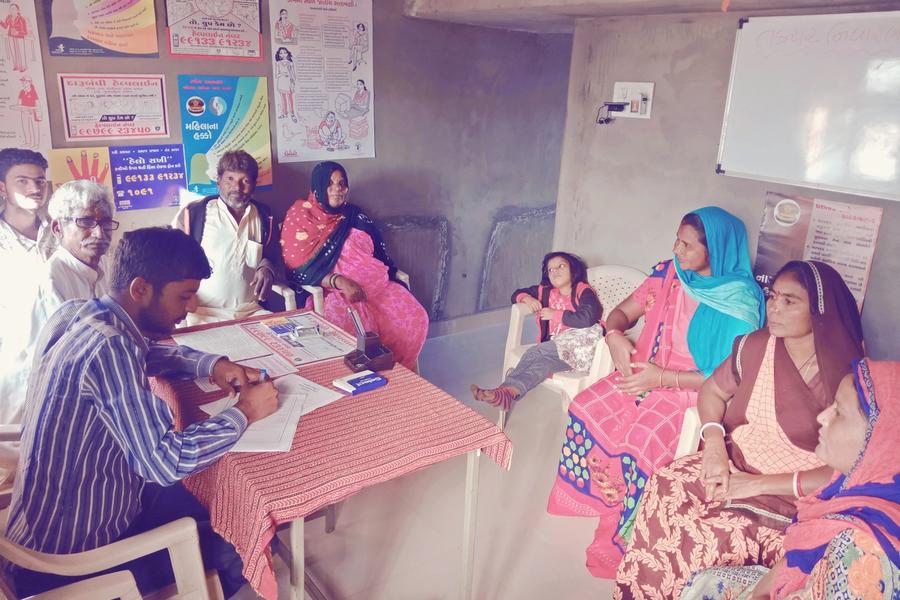
Work with the Devipoojak Samaj begins in Bhuj, as part of KMVS’ growing urban programme, to dialogue with traditional caste panchayat leaders, building a gender rights perspective within a resilient traditional system.
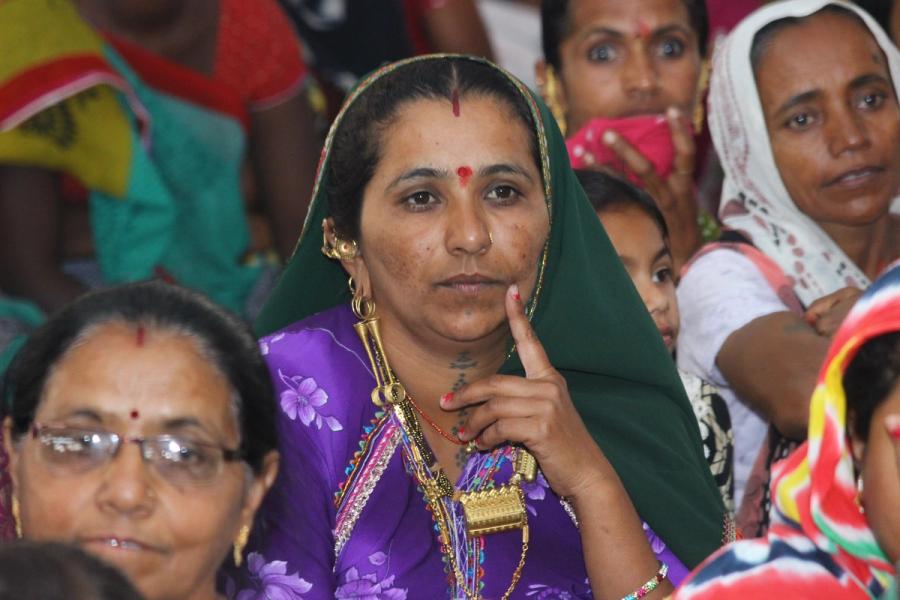
‘Safe District’ and ‘Salamati’ emerge as key watchwords informing KMVS work going forward; it is a wholistic vision for women’s rights and violence-free lives.
2017
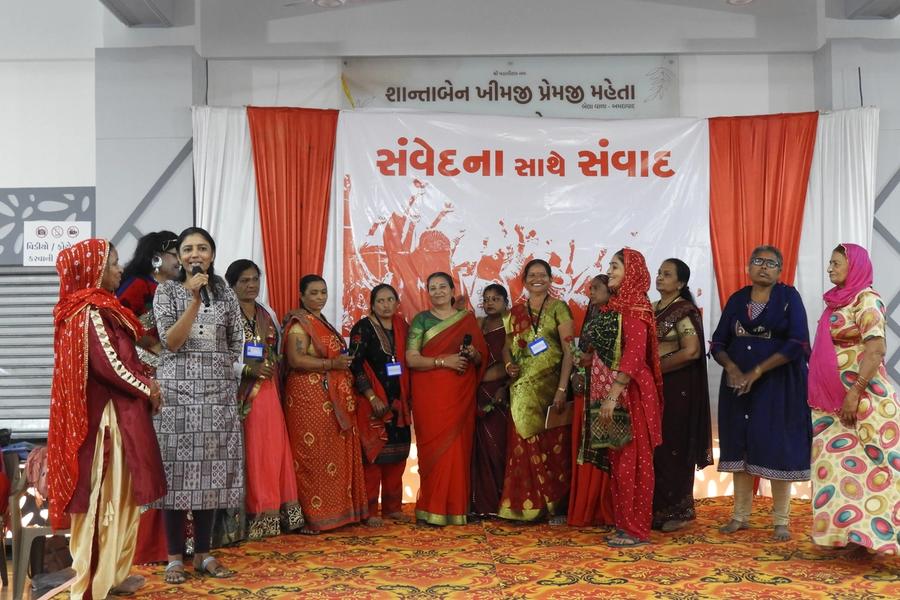
Samvedna, a group catalysed by KMVS, emerges as the voice of female sex workers in Bhuj, after KMVS starts organising and building leadership among this most stigmatised group of women workers.
2018
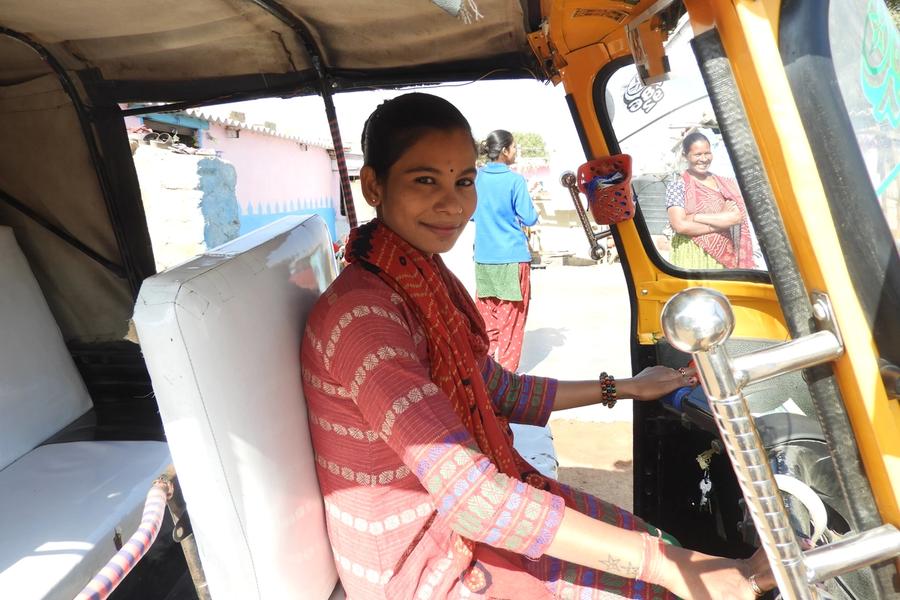
Chandni and Asha, two young women trained and supported by the KMVS alternative livelihood initiative, breach a male citadel by launching their own chakda (auto rickshaw) driving services with great fanfare at a public event in Bhuj.
2019
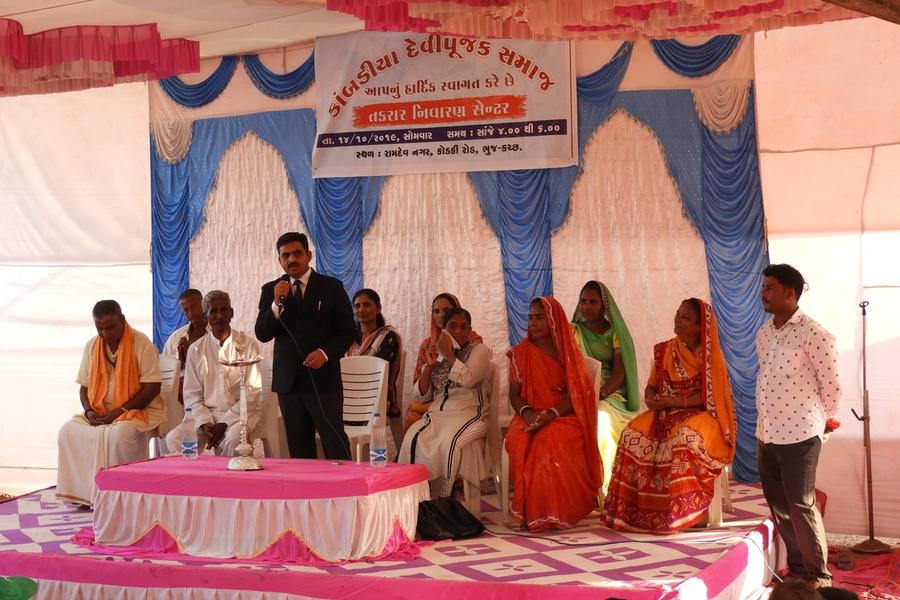
Takrar Nivaran Centre, a novel KMVS community-based dispute resolution centre, is inaugurated by the District Judge of Kutch. It is managed by 6 paralegals from the Devipoojak community, and linked to the District Legal Services Authority.
2020
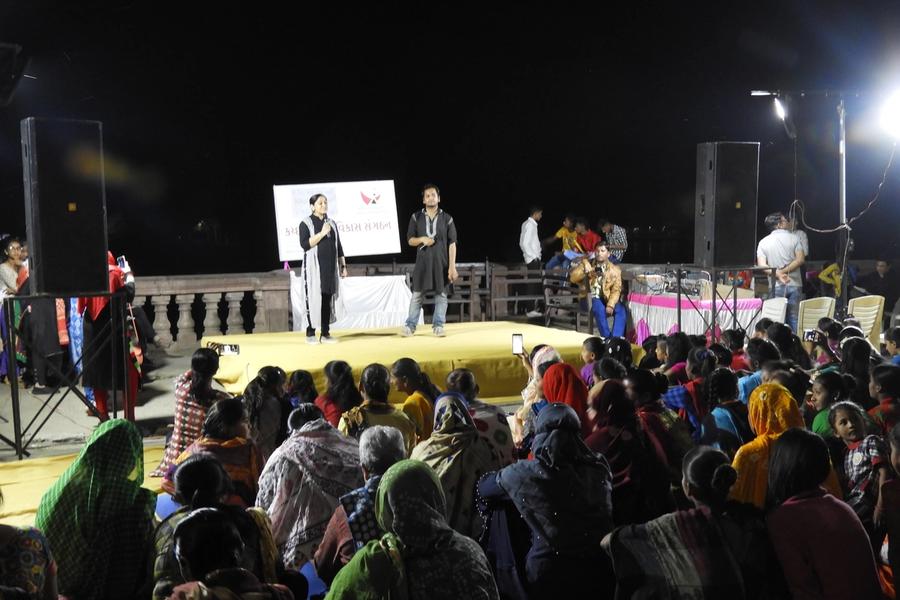
A strip check of 68 young women in a local college, to see if they were menstruating and ‘polluting’ specific campus spaces, sparks a media frenzy. KMVS’ youth leaders steer the public conversation with a clear stand against gender based orthodoxy and menstruation taboos. It’s the first mass protest by Bhuj citizens on this ‘silent’ issue.
2023

A national convention on Jati and Mazhabi (Caste and Religion-based) Panchayats is hosted by KMVS in Bhuj, initiating a nation-wide dialogue on ways to engage with these traditional spaces towards greater gender equality.